Kitchen Essentials for Beginners: The Must-Have Tools to Start Cooking
Starting your cooking journey doesn’t mean filling your kitchen with dozens of expensive gadgets. In fact, many beginner cooks become overwhelmed because they think they need everything before they can make a great meal.
The truth is that most recipes use the same handful of tools over and over again.
In this lesson, you’ll learn exactly which kitchen essentials are worth buying first, which tools can wait, and how each one is used. By the end of this lesson, you’ll know how to build a functional kitchen without wasting money, making it easier to cook your favorite recipes with confidence.
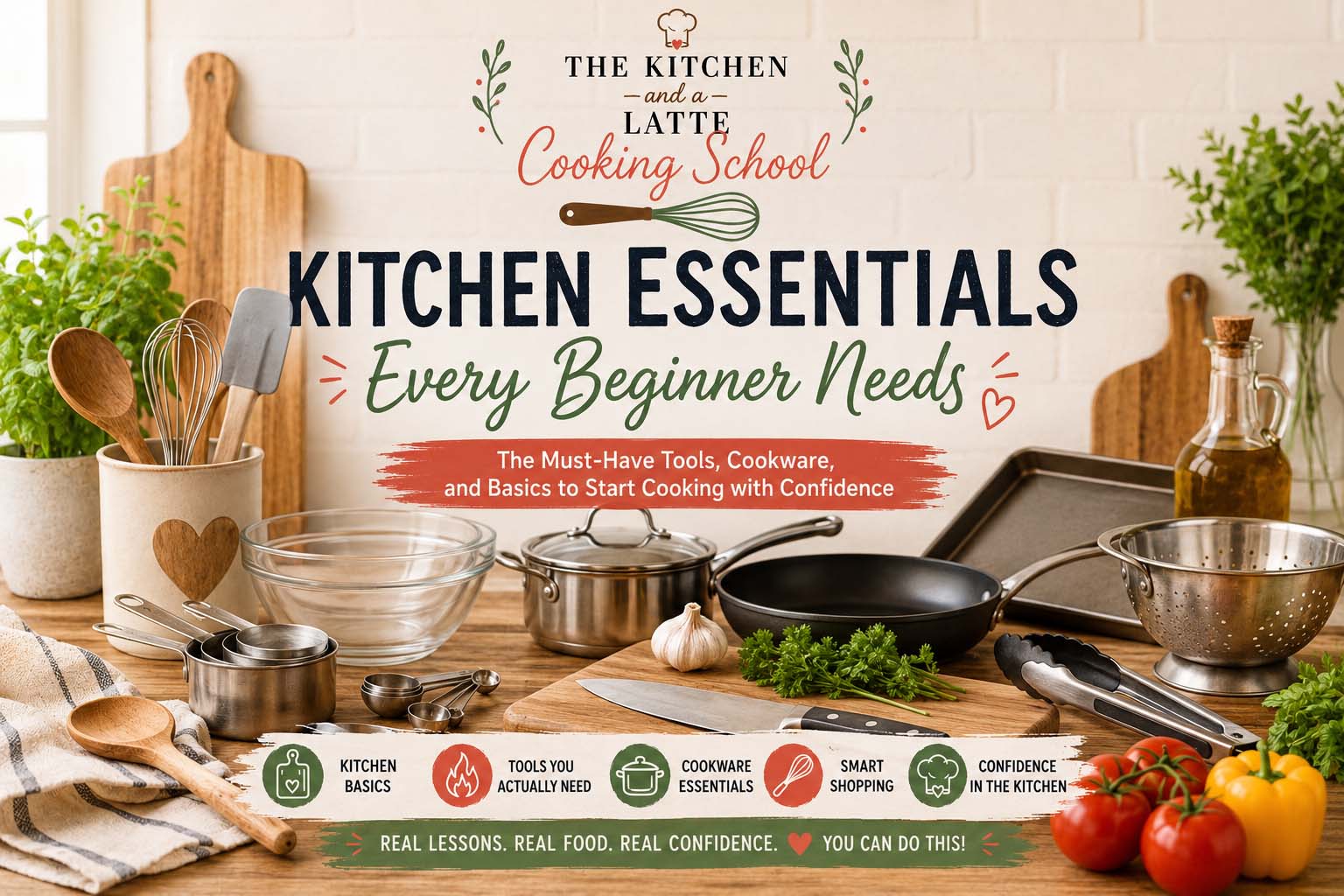
This is lesson 2 of our cooking school. If you missed lesson 1 cooking for beginners, I highly recommend you go to check it out! It is the start of our lessons and a very important lesson that brings everything else together. Lesson 1 has 50 tips to help you become a confident home cook. Ready for lesson 2?
We use affiliate links on our site. This post may contain affiliate links and we may earn a commission on qualifying purchases. Please see our affiliate disclosure for more details.
What you will learn
✓ Which kitchen tools every beginner actually needs
✓ Which items you can skip for now
✓ How to choose quality cookware without overspending
✓ The difference between essential and optional gadgets
✓ How to organize your kitchen for easier cooking
Chapter 1: Start with the Basics
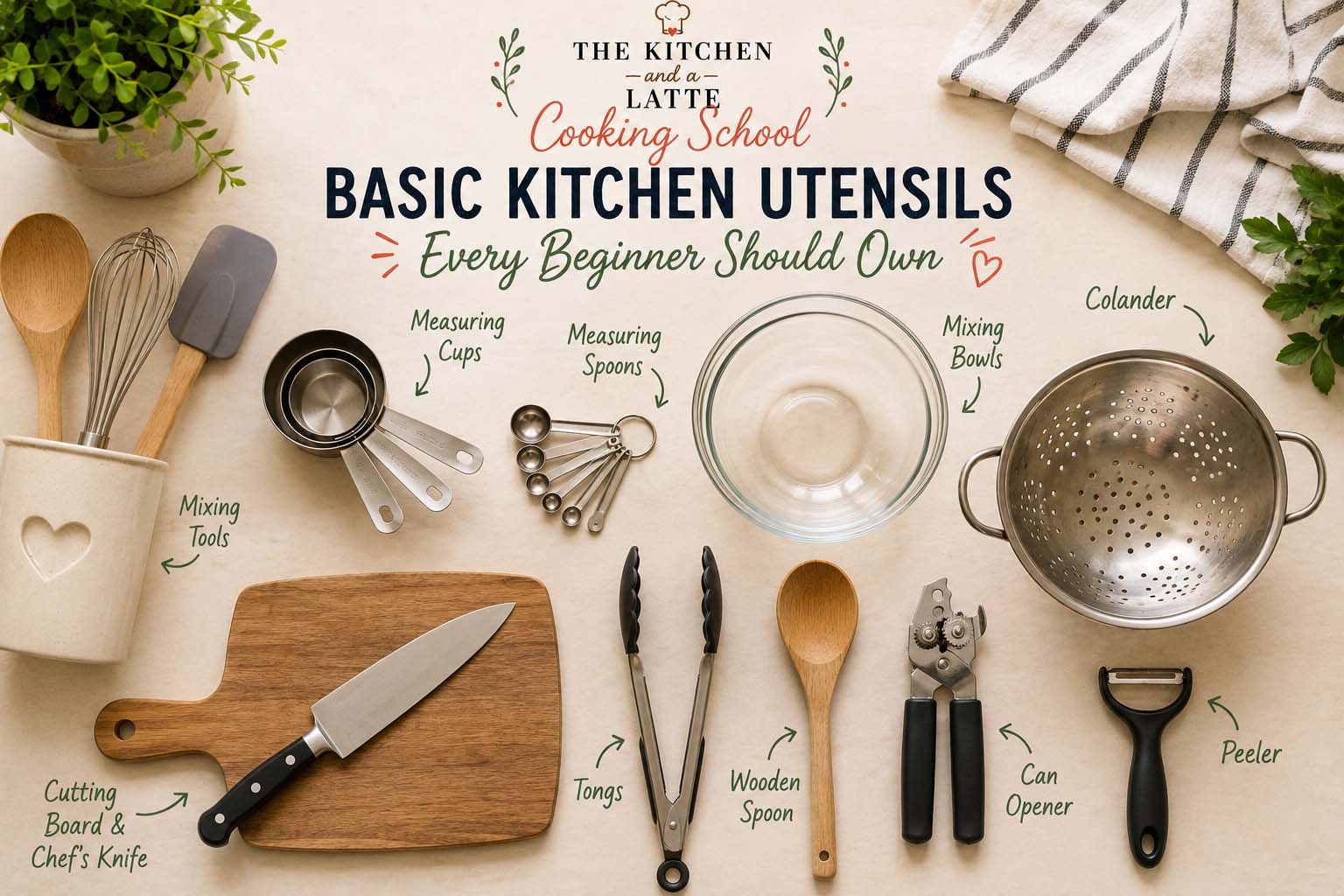
One of the biggest mistakes beginners make is buying every gadget they see online. While specialty tools can be fun, most meals can be prepared using a small collection of reliable equipment.
Start by investing in quality basics instead of quantity.
Your starter kitchen should include:
- Chef’s knife
- Cutting board
- Measuring cups
- Measuring spoons
- Mixing bowls
- Wooden spoon
- Silicone spatula
- Tongs
- Whisk
- Can opener
- Vegetable peeler
- Colander
These simple tools will handle the majority of recipes you’ll make.
Chapter 2: Cookware You Actually Need
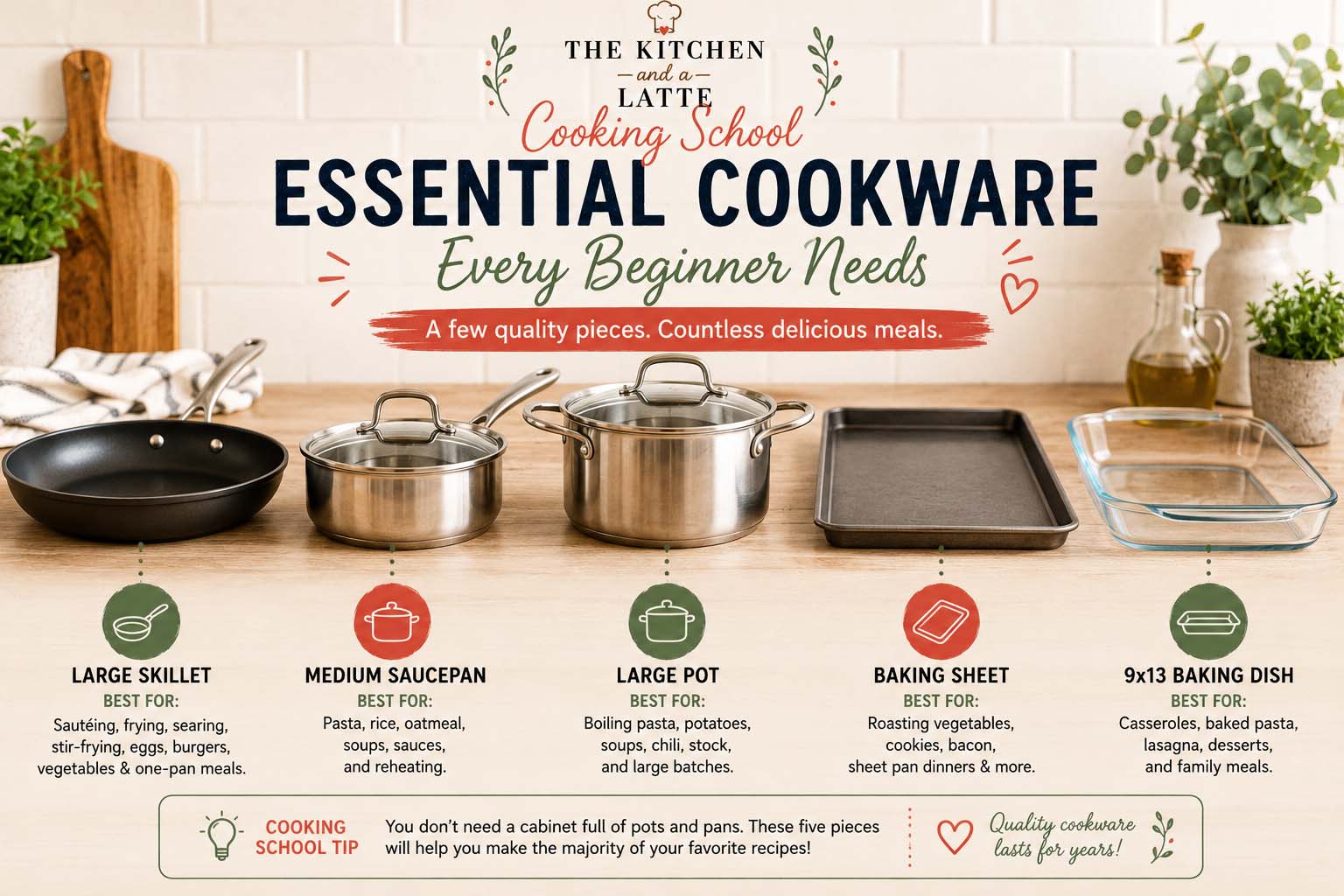
You don’t need a cabinet full of pots and pans. Trust me, I have a lot of cookware and don’t use 90% of the cookware I own.
A beginner kitchen only needs a few versatile pieces. Start here and you can add a few pieces as you need them. Most sets have enough pots and pans for a home cook.
Essential Cookware
Large Skillet
Perfect for chicken, burgers, vegetables, eggs, stir fry, and countless one-pan meals.
Medium or Small Skillet
Perfect for omelets, scrambled eggs or dinner for 1.
Medium Saucepan
Great for pasta, rice, soups, sauces, and oatmeal.
Large Pot
Perfect for boiling pasta, potatoes, soups, chili, and stock.
Baking Sheet
Useful for roasting vegetables, cookies, sheet pan dinners, bacon, and much more.
9×13 Baking Dish
Ideal for casseroles, desserts, baked pasta, and family dinners.
Buying quality cookware now will last for years.
Chapter 3: The Most Important Knife in Your Kitchen
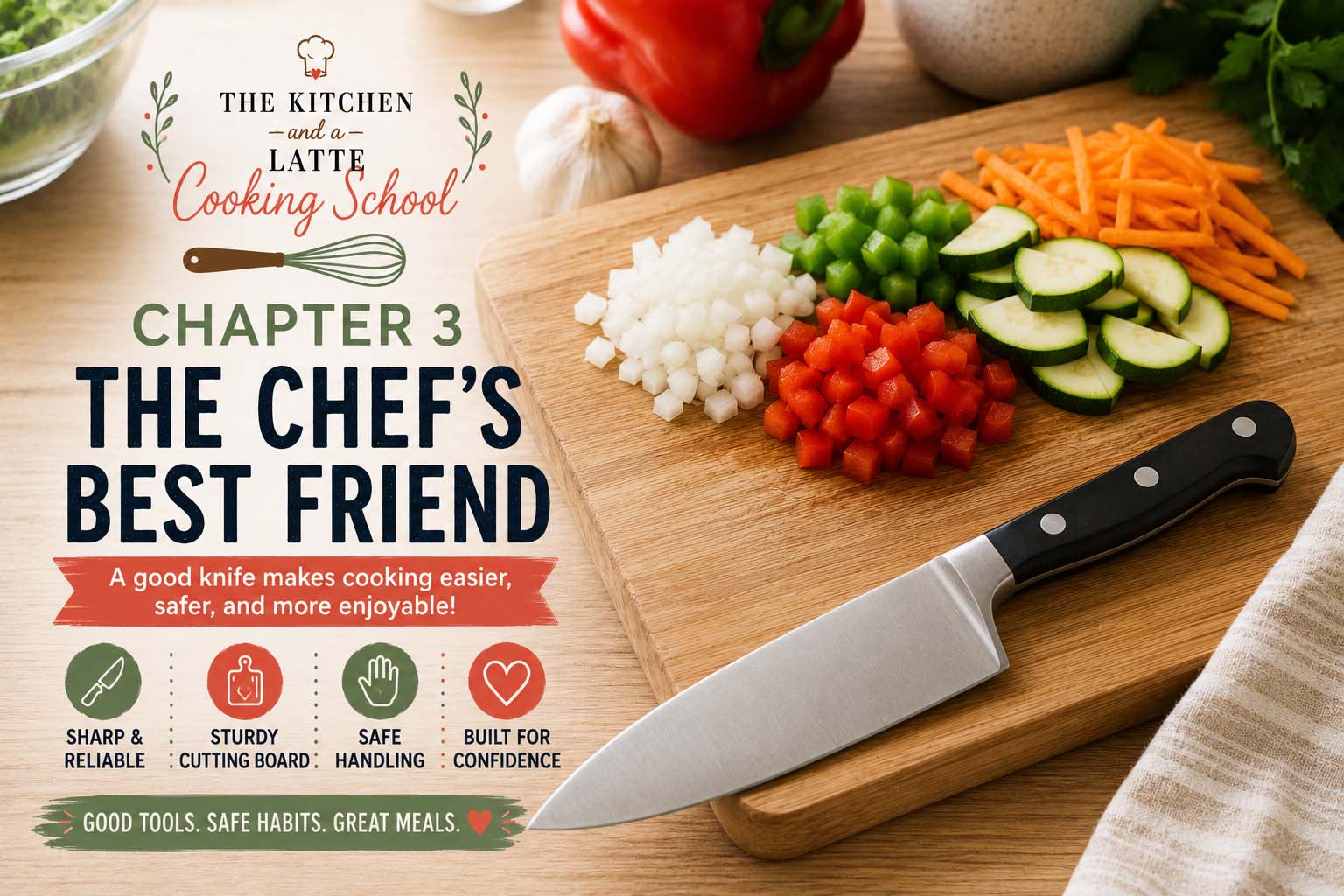
If you only buy one knife, make it a quality chef’s knife. I do recommend a set with steak knives, but just know that you will have one favorite that is your go to. But to start out, you don’t need a full set. You can upgrade as you get more familiar with cooking and using knives.
A chef’s knife can handle:
- slicing vegetables
- chopping herbs
- cutting meat
- dicing onions
- mincing garlic
- preparing fruit
You don’t need an expensive professional knife.
Instead, choose one that:
- feels comfortable
- fits your hand
- stays sharp
- has good balance
A sharp knife is actually much safer than a dull one because it requires less force.
Always pair your knife with 2-3 sturdy cutting boards (if using wood or bamboo.) If you use a glass cutting board, you can get away with using 1. Mine are wood and bamboo – 1 for raw meat, 1 for veggies and 1 for fruit to start. I actually have several cutting boards that I use and a couple for taking food pictures for my blog. They all serve a different purpose, but you don’t need to start out with them all.
1 is for raw meat, 1 is for vegetables, 1 is for fruit, 1 is smaller for cutting something small and quick, 1 very large for cutting a turkey, 1 large round one for bread/yeast dough. BUT start small. You may not want to bake a big turkey (literally the only thing I use one of mine for) or you may not want to bake bread.
Chapter 4: Measuring Matters
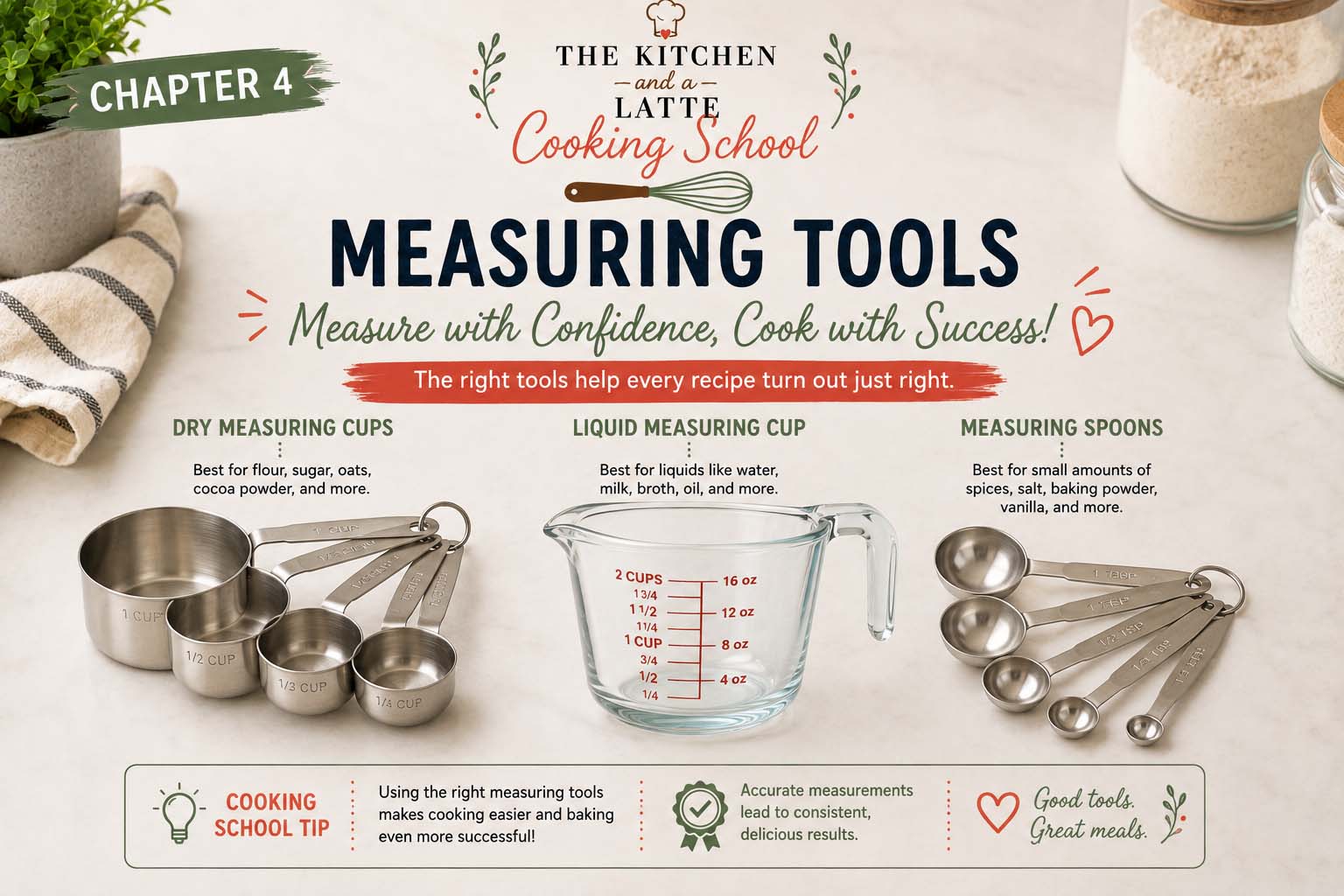
Cooking allows for some flexibility, but baking is much more precise.
Every kitchen should have:
Dry Measuring Cups
Used for:
- flour
- sugar
- oats
- cocoa powder
Liquid Measuring Cup
Used for:
- milk
- broth
- water
- oil
Measuring Spoons
Used for:
- salt
- baking powder
- spices
- vanilla
Using the correct measuring tools helps recipes turn out consistently every time.
Chapter 5: Kitchen Gadgets Worth Buying Later
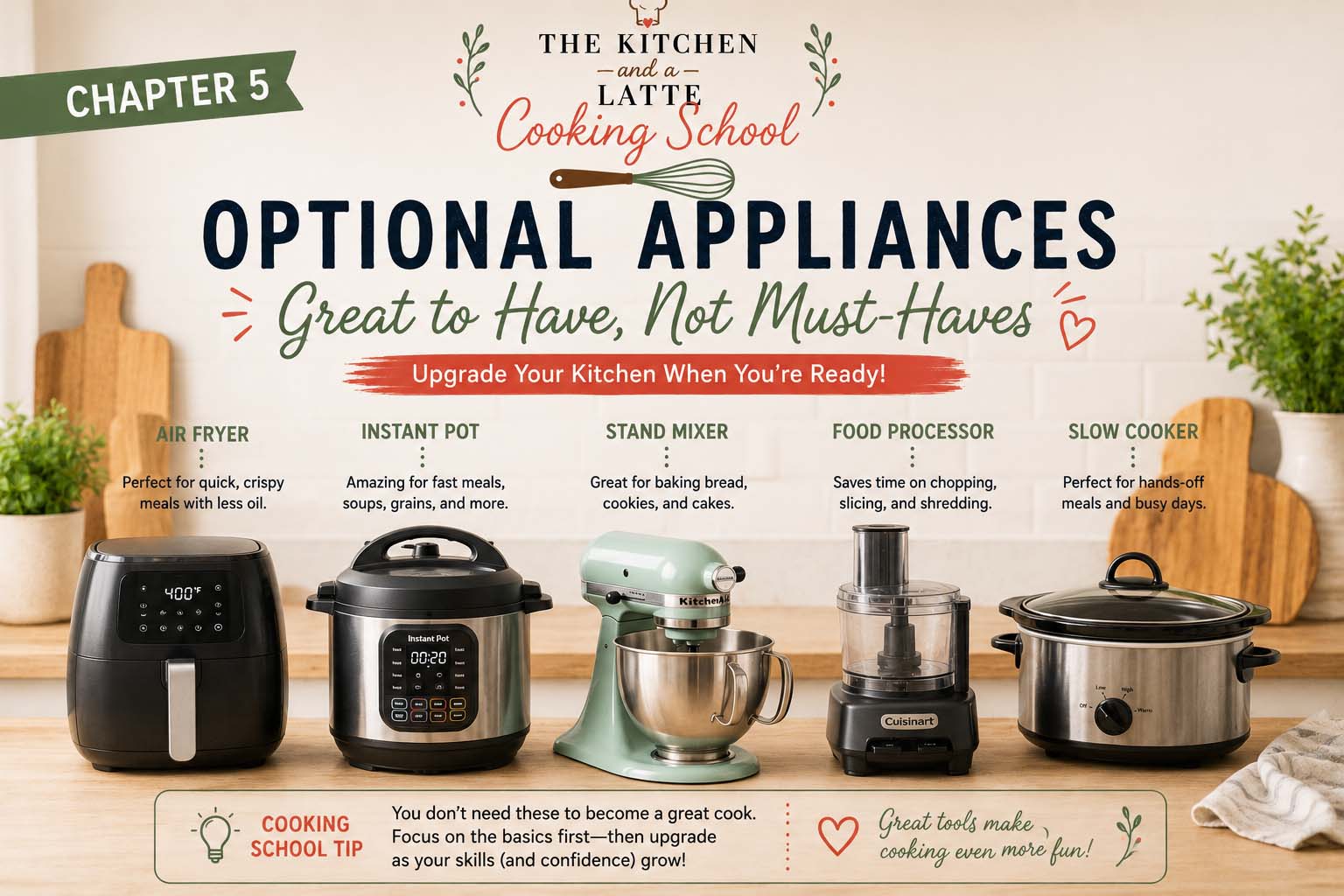
After you’ve been cooking for a while, you may decide to expand your kitchen. While these are pretty important in the kitchen, you can wait until you become more confident in cooking.
Helpful upgrades include:
- Instant-read thermometer
- Kitchen scale
- Food processor
- Immersion blender
- Slow cooker
- Instant Pot
- Stand mixer
- Air fryer
These tools are wonderful, but they aren’t necessary for learning how to cook.
Master the basics first.
Pro Tips
• Spend more money on a good chef’s knife than trendy gadgets.
• Silicone utensils won’t scratch nonstick cookware.
• Buy mixing bowls that nest together to save cabinet space.
• Keep frequently used tools within easy reach.
• Wash and put away tools after cooking to keep your kitchen organized.
Common Mistakes
Mistake
Buying too many kitchen gadgets.
Why it happens
New cooks often think every recipe requires specialized equipment.
How to fix it
Start with the basics and add specialty tools only when you find yourself needing them regularly.
Quick Recap
A few quality tools are better than lots of cheap gadgets.
A chef’s knife is your most important kitchen tool.
Buy versatile cookware first.
Use proper measuring tools for accurate recipes.
Add specialty appliances over time as your cooking skills grow.
Frequently Asked Questions
No. Mid-range cookware is perfect for most home cooks.
A quality 8-inch chef’s knife is the best all-around choice.
One large skillet can handle many meals, but having a saucepan and stock pot makes cooking much easier.
Yes. Accurate measuring helps recipes turn out consistently.
Wooden spoons are great for stirring, while silicone spatulas help scrape bowls clean and work well with nonstick cookware.
Only if you’ll use it often. It isn’t required to become a confident cook.
A sharp knife cuts cleanly with less force, reducing the chance of slipping.
At least two. One for produce and another for raw meat helps prevent cross-contamination.
Tongs. They’re useful for grilling, flipping meat, tossing salads, and serving food.
Quality cookware can last many years with proper care. I have stainless steel pots that are about 28 years old and look brand new. I use them all the time.
Homework
Practice this skill by:
Go through your kitchen and make a list of the tools you already own. Identify which essentials you’re missing and think about how you could use the items you already have to prepare a simple meal.
Challenge yourself to:
Cook one complete meal using only the basic kitchen tools covered in this lesson. Notice which tools you reach for most often and which ones you never use.
Next Lesson
Now that your kitchen is stocked with the essentials, it’s time to learn one of the most important cooking skills of all: Knife Skills for Beginners. You’ll discover how to safely hold a knife, make common cuts, and chop fruits and vegetables faster and more confidently.