Cooking for Beginners: Everything You Need to Know to Start Cooking
Learning how to cook doesn’t have to be intimidating. Whether you’re making your very first meal or simply want to feel more confident in the kitchen, this beginner-friendly guide will teach you the basic cooking skills every home cook should know.

We use affiliate links on our site. This post may contain affiliate links and we may earn a commission on qualifying purchases. Please see our affiliate disclosure for more details.
Welcome to The Kitchen and a Latte Cooking School! 👩🍳
If you’ve ever looked at a recipe and thought…
“Where do I even start?”
…you’re in exactly the right place.
Cooking can seem overwhelming at first. There are recipes with unfamiliar ingredients, cooking terms you’ve never heard before, and advice coming from every direction. It’s easy to wonder if everyone else knows something you don’t.
Here’s the truth.
Every great home cook started exactly where you are.
Nobody is born knowing how to grill the perfect steak, roast a chicken, or bake homemade cookies. Those skills come from practice, a little patience, and a willingness to learn from the occasional kitchen mistake.
That’s what this guide is all about.
This is the very first lesson in The Kitchen and a Latte Cooking School, a free series designed to help you become a confident home cook one step at a time.
We’re going to skip the complicated chef talk and focus on practical advice that you can start using today.
By the time you finish this guide, you’ll understand the habits that make cooking easier, the mistakes to avoid, and the simple techniques that will help every meal turn out better.
So pour yourself a cup of coffee, grab your favorite apron if you have one, and let’s get cooking.
What You’ll Learn in This Guide
By the end of this lesson, you’ll know:
- The habits every great home cook develops
- How to avoid the biggest beginner mistakes
- Why heat matters more than most people realize
- How to season food with confidence
- The easiest ways to improve almost any recipe
- How to build confidence in the kitchen
- 50 practical cooking tips you’ll use for years
Don’t worry if you’ve never cooked before.
We’ll take it one step at a time.
Why Learning to Cook Is Worth It
Cooking isn’t just about making dinner.
It’s about creating a skill you’ll use for the rest of your life.
When you learn to cook, you aren’t memorizing recipes. You’re learning techniques that work in hundreds of different meals.
Cooking at home can help you:
- Save money.
- Eat healthier.
- Spend more time with family.
- Feel more confident.
- Reduce food waste.
- Create meals exactly the way you like them.
The best part?
Every meal teaches you something new.
Even after years of cooking, I still learn new tricks, discover new flavors, and find better ways to make old favorites.
That’s one of the reasons cooking never gets boring.
Something to Remember
⭐ Kitchen Confidence – Let’s Begin
You are going to burn something.
You might overcook chicken.
You might accidentally add too much salt.
You might forget an ingredient.
Welcome to the club! Every experienced cook has done all of those things. The difference is they didn’t let one bad meal convince them they couldn’t cook.
Cooking isn’t about perfection.
It’s about progress.
Every recipe you make is another opportunity to learn.
Chapter 1: Building Great Kitchen Habits
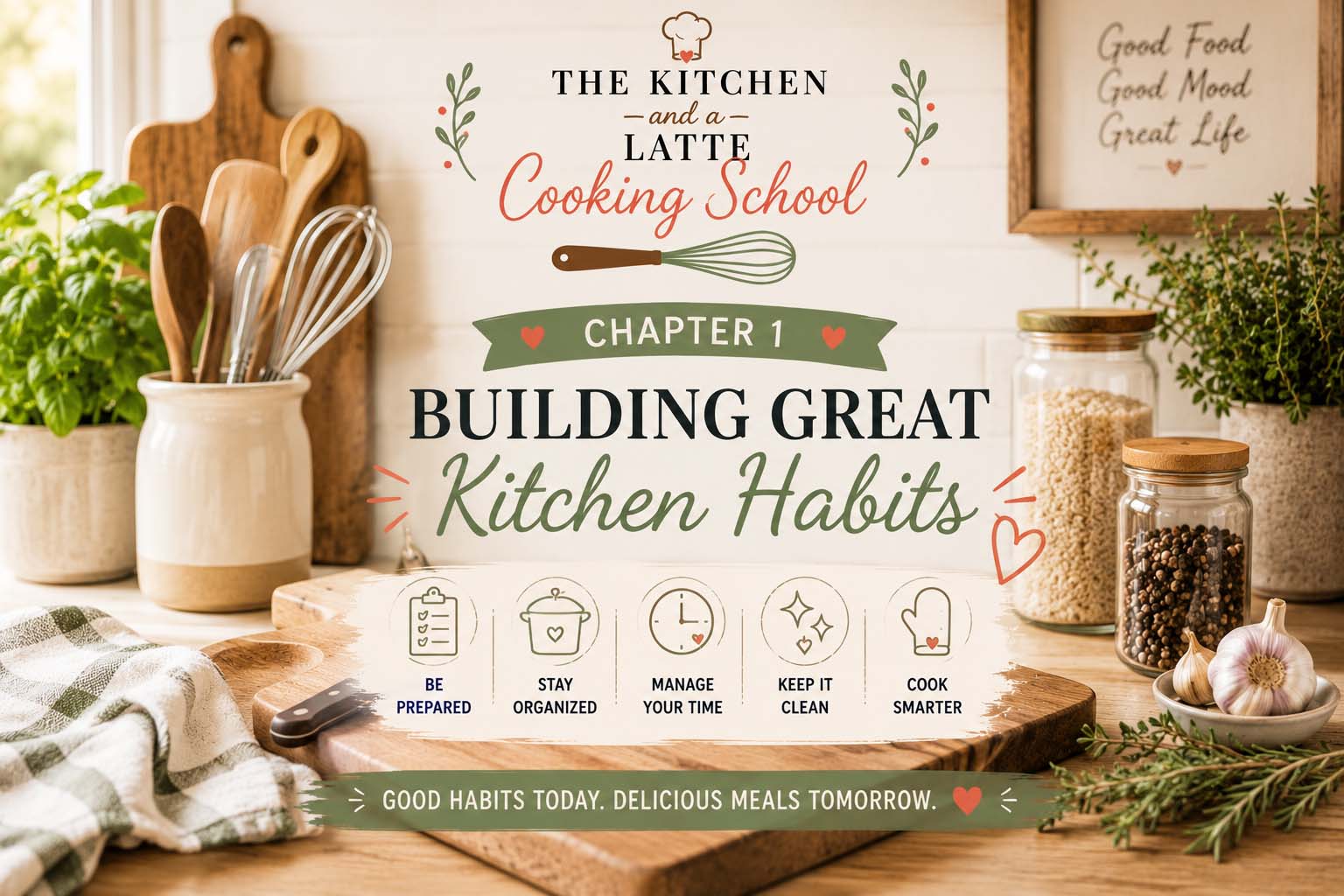
Before we talk about cooking techniques, let’s build the habits that make every recipe easier.
These first ten tips may seem simple, but they’re the foundation that experienced home cooks rely on every day.
Read the Entire Recipe Before You Start
This might be the most valuable habit in this entire guide.
Instead of reading only the ingredient list, read every single step before turning on the stove.
Doing this helps you understand:
- How long the recipe will take.
- What ingredients need to be prepared first.
- Which kitchen tools you’ll need.
- Whether anything needs to marinate or rest.
- Which steps happen at the same time.
There’s nothing worse than discovering halfway through dinner that the recipe expected your oven to be preheated twenty minutes ago.
Taking two minutes to read the recipe first saves frustration later.
Before you move on, take a minute to read this recipe for One Pot Creamy Beef and Pasta. I picked this one because it is not as hard to make, but does have a long ingredient list (which can seem intimidating in the beginning.) BUT it is an easy recipe to read and make. Don’t let the ingredients scare you.
Now look at this recipe for my breakfast bake and see how at the top of the instructions it says to preheat oven?
👩🍳 Chef’s Tip: The Recipe
If you’re making a recipe for the first time, read it twice. You’ll notice details the second time that you probably missed the first.
Get Everything Ready Before You Turn On the Stove
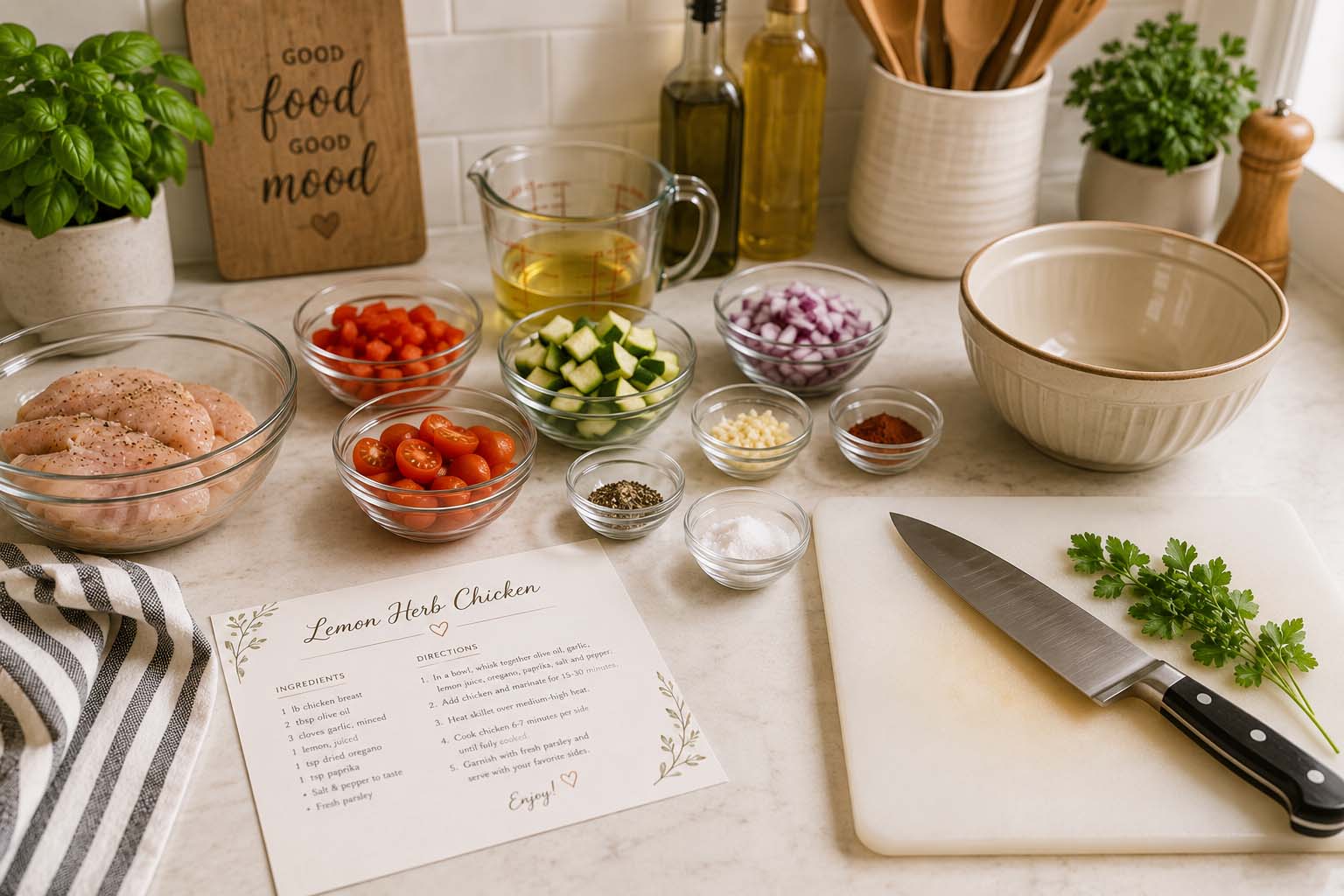
Professional chefs have a habit that beginners should absolutely copy.
It’s called mise en place, which simply means “everything in its place.”
Before you cook:
- Measure your spices.
- Chop your vegetables.
- Prepare your meat.
- Open canned ingredients.
- Gather every tool you’ll need.
Now imagine trying to dice an onion while your butter is already burning.
Not much fun.
Preparing everything first lets you focus on cooking instead of rushing around your kitchen.
It’s one of the easiest ways to make cooking feel relaxing instead of stressful.
🍴 Practice Tonight – Getting Ready
Before making dinner tonight, spend five minutes getting everything ready before turning on the stove.
You’ll be surprised how much smoother the entire cooking process feels.
Don’t Be Afraid to Cook Slowly
One of the biggest mistakes beginner cooks make is turning the burner up too high.
It seems logical.
Higher heat should cook food faster…
Right?
Not usually.
High heat often burns the outside before the inside has time to cook.
Medium heat is your friend.
It gives food time to brown, develop flavor, and cook evenly.
Patience almost always produces better food.
⚠️ Common Beginner Mistake – Beat the Hunger
Cooking because you’re hungry often leads to rushing.
Whenever possible, start dinner before everyone is starving.
You’ll make better decisions, enjoy the process more, and your food will usually taste better.
Taste Your Food While You Cook
One of the biggest differences between new cooks and experienced cooks is simple.
Experienced cooks taste their food.
Often.
As soups simmer, sauces reduce, and seasonings blend together, flavors change.
A quick taste lets you decide if the dish needs:
- A little more salt.
- Fresh pepper.
- Garlic.
- Lemon juice.
- Fresh herbs.
Small adjustments throughout cooking create better results than trying to fix everything at the end.
💡 Did You Know?
You should always taste with a clean spoon. Never dip the same spoon back into your food after tasting
Learn the Difference Between Boiling and Simmering
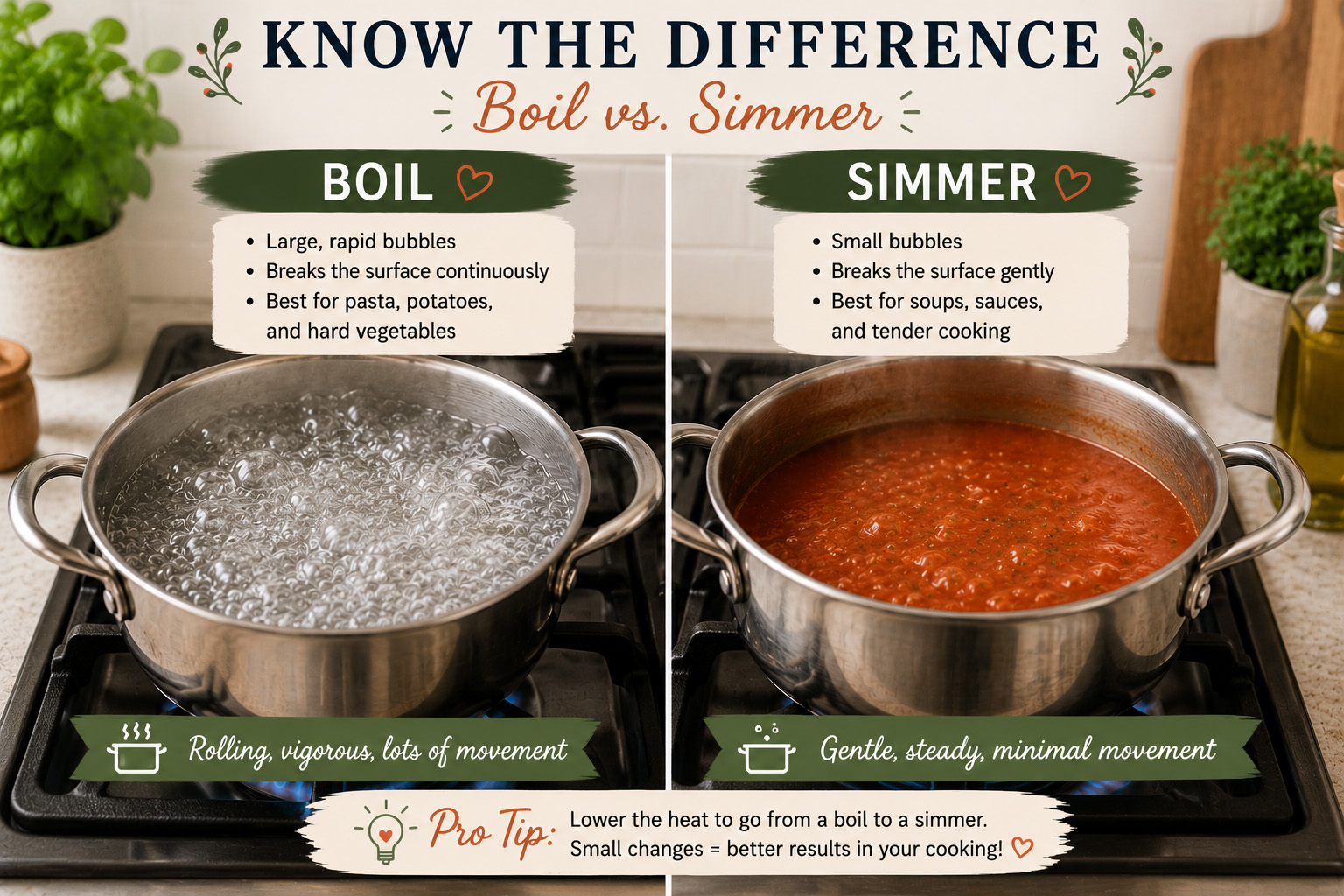
One of the easiest ways to improve your cooking is to understand how heat affects your food.
Many recipes tell you to bring something to a boil and then reduce it to a simmer. If you’re new to cooking, those instructions might sound like the same thing, but they produce very different results.
A rolling boil has large bubbles constantly breaking the surface of the liquid. It’s perfect for cooking pasta, potatoes, and blanching vegetables.
A simmer is much gentler. Small bubbles slowly rise to the surface while the liquid barely moves. This slower cooking method is ideal for soups, stews, chili, sauces, and braised meats because it gives the flavors time to develop without overcooking the ingredients.
When in doubt, remember this simple rule:
- Boil to cook quickly.
- Simmer to build flavor.
Most homemade soups taste better after simmering for a while because all of the ingredients have time to blend together.
💡 Did You Know?
Leaving soup at a full boil can actually make vegetables fall apart and toughen certain cuts of meat. A gentle simmer is almost always the better choice.
Season Throughout the Cooking Process
One of the biggest differences between restaurant food and homemade food isn’t expensive ingredients. I do this all the time. Especially when making sauces and chili!
It’s seasoning.
Many beginner cooks wait until the very end to add salt and pepper. Experienced cooks build flavor little by little throughout the recipe.
Think of seasoning as adding layers instead of dumping everything in at once.
For example, if you’re making a pot of chili, you might season the ground beef while it cooks, add spices when the vegetables are sautéing, and then taste the chili again before serving.
Building flavor gradually creates a more balanced dish.
If you’re nervous about over-seasoning, start with small amounts. You can always add more, but it’s much harder to remove seasoning once it’s in the food.
👩🍳 Chef’s Tip – Adding Salt
Salt doesn’t just make food salty. When used correctly, it enhances the natural flavor of the other ingredients.
You will learn to season with practice
⭐ Kitchen Confidence – Seasoning
Don’t worry if your food isn’t perfectly seasoned the first few times.
Learning how much seasoning tastes right is something every cook develops through practice.
The more meals you make, the easier it becomes to trust your own taste buds.
Don’t Overcrowd the Pan
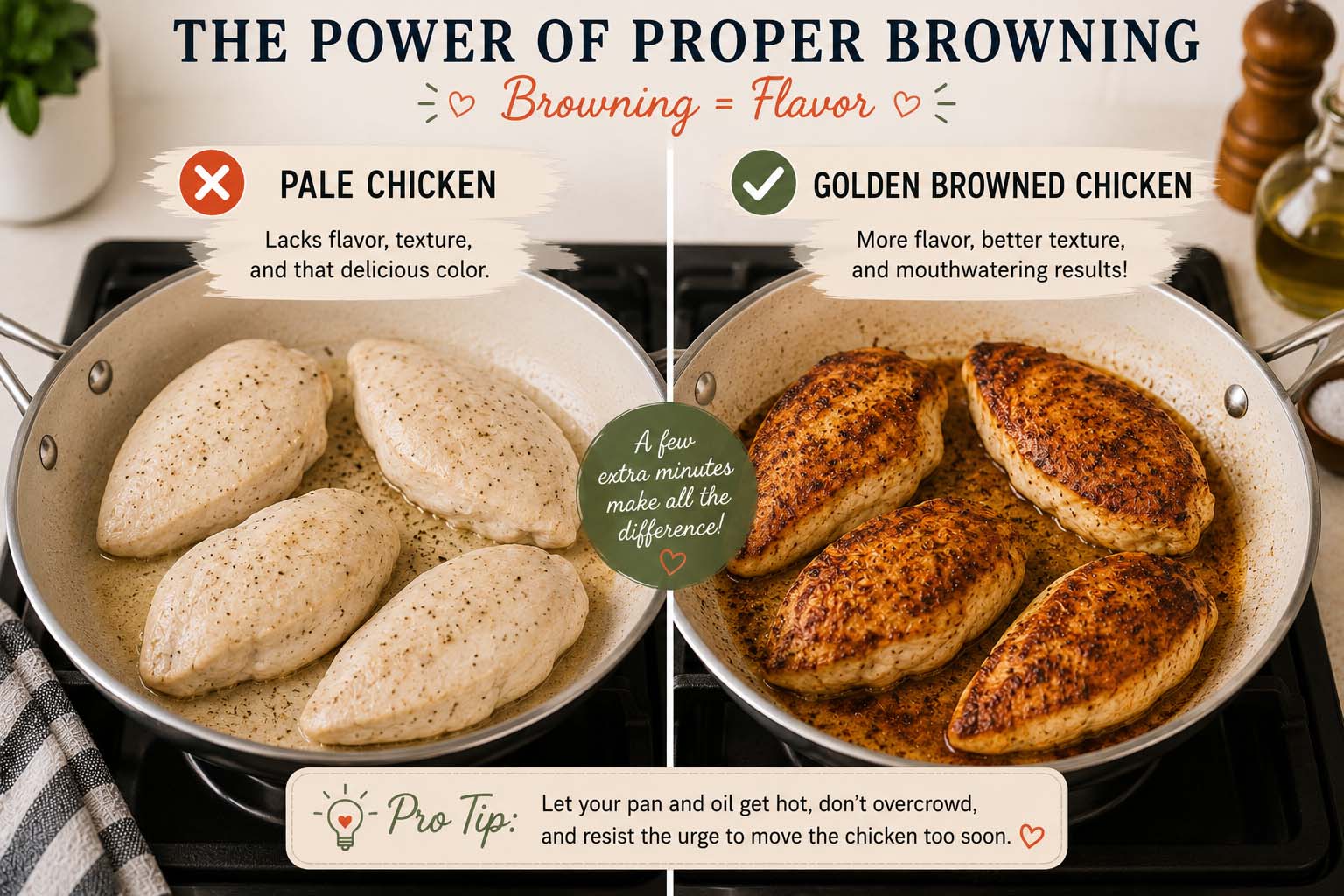
Have you ever cooked chicken that looked gray instead of beautifully browned?
Or vegetables that turned soft and watery instead of caramelized?
The problem probably wasn’t your recipe.
It was the pan.
When too much food is packed into one skillet, the moisture released by the food becomes trapped.
Instead of browning, the food steams.
That’s why recipes often tell you to cook in batches.
It may take a few extra minutes, but the results are worth it.
Leave a little space between pieces of food so heat can circulate around everything evenly.
You’ll end up with better color, better texture, and much more flavor.
⚠️ Common Beginner Mistake – Too Much
Filling the pan because “it all fits.”
Just because it fits doesn’t mean it will cook well.
Use a Digital Meat Thermometer
If I could recommend just one inexpensive kitchen tool to every beginner cook, it would be a digital meat thermometer.
It’s one of the easiest ways to cook meat with confidence.
Many people still cut into chicken or pork to see if it’s done, but that doesn’t always tell the whole story. Cutting into meat also lets flavorful juices escape.
A meat thermometer removes the guesswork.
Simply insert the thermometer into the thickest part of the meat and compare the temperature to the recommended safe cooking temperature.
Not only will your food be safer, but it will also be juicier because you’ll avoid overcooking it.
If you enjoy grilling, this tool quickly becomes one of the most valuable items in your kitchen.
🔗 Continue Learning
Be sure to check out our complete Safe Internal Meat Temperatures Guide for recommended cooking temperatures for chicken, beef, pork, seafood, and more.
🍴 Practice Tonight – Thermometer
The next time you cook chicken, skip cutting into it to check for doneness.
Instead, use a digital meat thermometer and compare the result to the recommended safe temperature.
You’ll probably be surprised how much juicier your chicken turns out.
Learn to Be Patient and Let Food Cook
One of the hardest lessons for new cooks is knowing when to leave food alone.
It’s tempting to flip chicken every minute, constantly stir vegetables, or move burgers around the pan because it feels like you’re doing something productive.
In reality, constantly moving food often prevents it from cooking properly.
When meat stays in contact with a hot pan or grill, it develops a flavorful golden-brown crust. Vegetables caramelize and become sweeter. Pancakes cook evenly and are easier to flip.
Instead of checking your food every few seconds, give it time to do its job.
If a recipe says to cook chicken for 5 to 6 minutes before flipping, trust the process. The food will usually release naturally from the pan when it’s ready.
Learning a little patience is one of the easiest ways to improve your cooking.
👩🍳 Chef’s Tip – Cooking Meat
If meat sticks to the pan, it usually isn’t ready to flip yet. Give it another minute or two and try again. Most proteins naturally release from the pan once they’ve developed a nice crust.
Learn to Be a Patient Cook
⭐ Kitchen Confidence – Patience
You don’t have to constantly “do something” while food cooks.
Some of the best cooking happens when you simply let the heat work its magic.
Learning when to leave food alone is a skill every great home cook develops.
🍴 Practice Tonight – Flipping Protein
The next time you cook chicken, burgers, or vegetables, challenge yourself to flip them only once unless the recipe says otherwise.
You’ll likely notice better browning, improved texture, and even more flavor.
Don’t Let Mistakes Stop You
This may be the most important lesson in this entire guide.
You are going to make mistakes.
You will probably burn something.
You’ll overcook pasta.
You’ll forget an ingredient.
You may even order pizza after a recipe doesn’t turn out the way you hoped.
That’s okay.
Every great cook has done exactly the same thing.
The goal isn’t to cook every meal perfectly.
The goal is to learn something every time you cook.
Instead of asking,
“Why am I bad at cooking?”
Ask,
“What can I do differently next time?”
That small shift in thinking changes everything.
Cooking isn’t about being perfect.
It’s about becoming a little more confident every time you step into the kitchen.
🎉 Chapter 1 Complete!
Congratulations!
You’ve just learned ten of the most important habits that experienced home cooks use every day.
Before moving on, try practicing these skills this week:
✅ Read every recipe completely before you start.
✅ Gather and prepare your ingredients before turning on the stove.
✅ Cook over medium heat instead of high whenever possible.
✅ Taste your food as it cooks.
✅ Use a meat thermometer the next time you make chicken or pork.
You don’t have to master everything at once.
Focus on one or two habits each time you cook, and before long they’ll become second nature.
In the next chapter, we’ll dive into Mastering Heat and Basic Cooking Skills, where you’ll learn how to control heat, cook with confidence, understand common cooking methods, and build even more flavor into every meal.
Chapter 2: Mastering Heat and Basic Cooking Skills
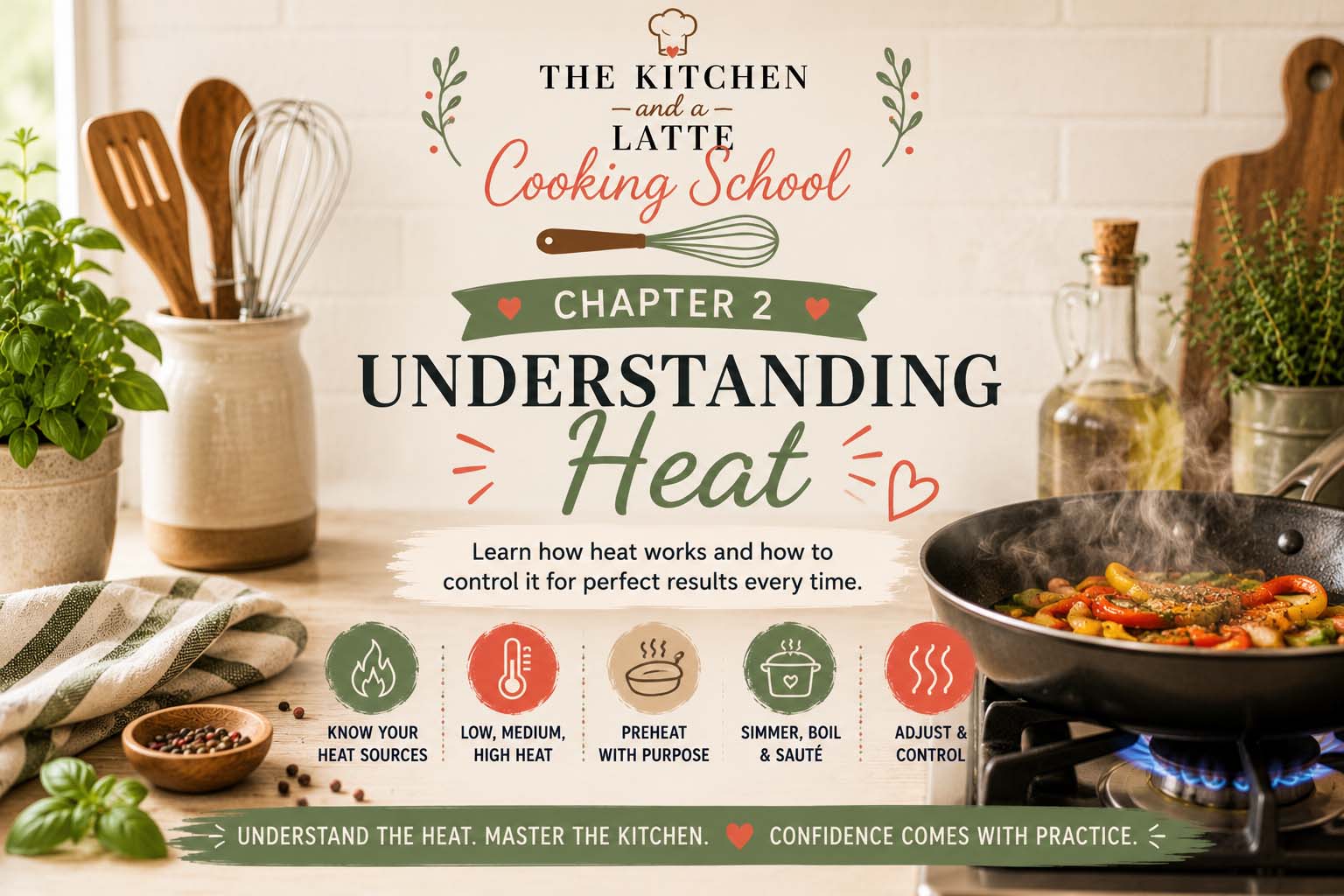
Now that you’ve built some great kitchen habits, it’s time to learn one of the biggest secrets to becoming a better cook.
It’s not a special ingredient.
It’s not expensive cookware.
It’s understanding heat.
Many beginner cooks assume cooking is all about following a recipe. While recipes are important, learning how heat affects food is what separates someone who simply follows instructions from someone who truly understands cooking.
The good news?
You don’t need years of experience to learn it.
Let’s dive in.
Understand Heat Levels
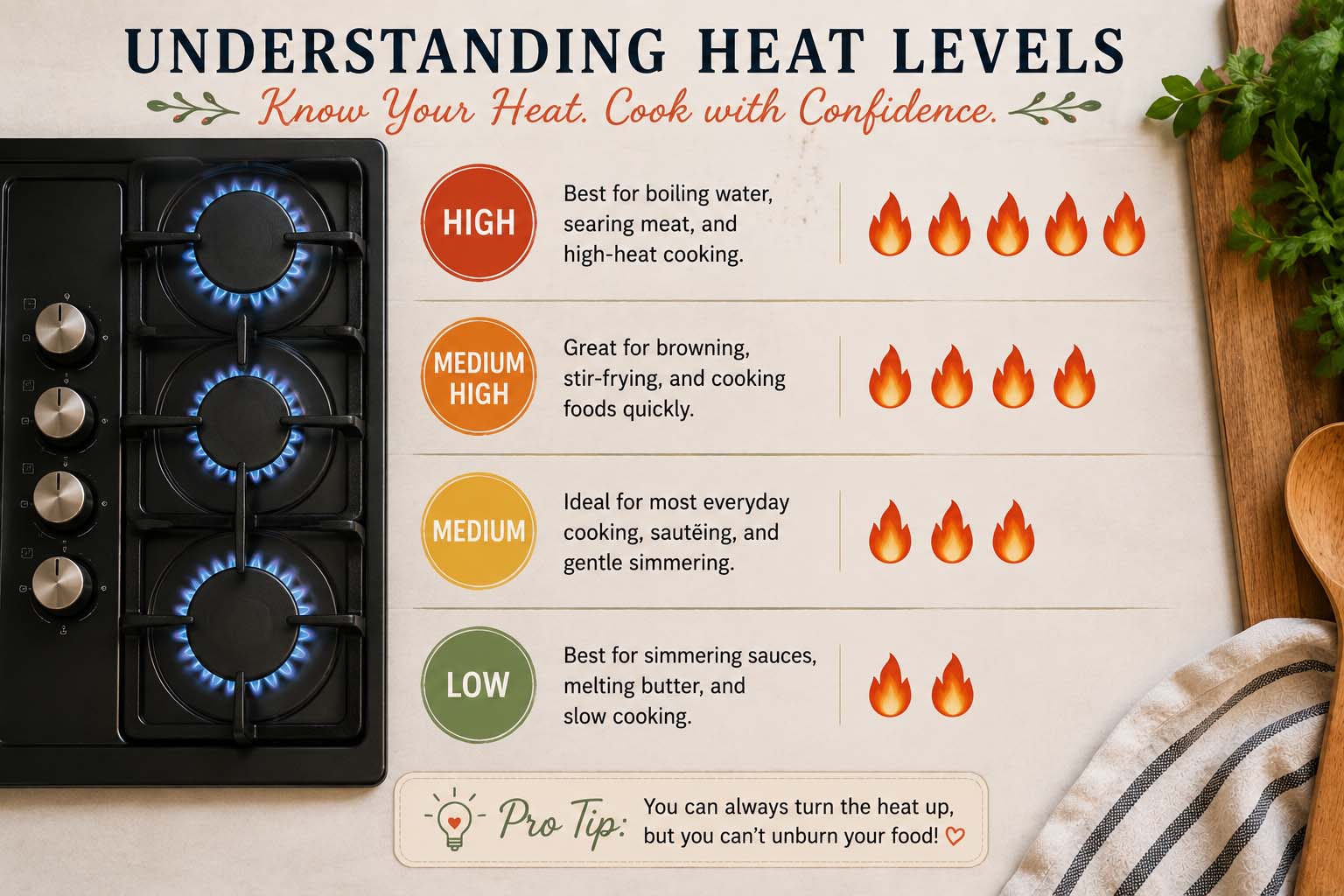
Have you ever looked at a recipe that says to cook over “medium-high heat” and wondered what that actually means?
You’re not alone.
Every stove is a little different, but here’s a general guide:
Low Heat
Perfect for:
- Melting butter
- Keeping sauces warm
- Cooking scrambled eggs
- Simmering delicate foods
Medium Heat
Perfect for:
- Sautéing vegetables
- Cooking pancakes
- Grilled cheese sandwiches
- Browning ground beef
Medium-High Heat
Perfect for:
- Searing chicken
- Stir-frying vegetables
- Cooking pork chops
High Heat
Best for:
- Boiling water
- Quickly searing steaks
- Wok cooking
Many beginners automatically turn the burner to high because they’re hungry.
Ironically, that usually makes dinner take longer because burned food has to be started over.
⚠️ Common Beginner Mistake – Heat
Turning every burner to high.
High heat has its place, but most everyday cooking happens over medium or medium-high heat.
Don’t Be Afraid to Adjust the Heat
Recipes are guidelines.
Your stove may cook hotter or cooler than the recipe writer’s stove.
That means it’s perfectly okay to adjust the heat while you’re cooking.
If onions are browning too quickly…
Turn it down.
If soup isn’t simmering…
Turn it up slightly.
One of the biggest signs that you’re becoming a better cook is learning to adjust as you go instead of following every recipe exactly.
Cooking is flexible.
👩🍳 Chef’s Tip – Keep an Eye on Food
Watch your food more than your timer.
The food will tell you what it needs.
Learn to Brown Food Properly
Beautiful golden-brown food isn’t just prettier.
It tastes better.
When meat, onions, mushrooms, or vegetables brown, something called the Maillard Reaction happens.
Don’t worry about remembering the scientific name.
Just remember this:
Brown food equals more flavor.
To get better browning:
- Pat meat dry before cooking.
- Preheat your pan.
- Don’t overcrowd it.
- Let food sit without constantly moving it.
You’ll notice a huge improvement in flavor once you learn this simple technique.
Learn When to Cover the Pan
Sometimes food cooks better with the lid on.
Sometimes it doesn’t.
Knowing the difference helps create better results.
Cover the Pan When:
- Cooking rice
- Simmering soup
- Braising meat
- Steaming vegetables
Leave the Lid Off When:
- Searing meat
- Reducing sauces
- Browning vegetables
- Crisping food
Keeping the lid off allows moisture to escape.
Keeping it on traps heat and steam.
💡 Did You Know?
Removing the lid from soup helps it thicken naturally because excess liquid evaporates.
Fresh Ingredients Make a Difference
You don’t need gourmet ingredients.
But using fresh ingredients whenever possible can dramatically improve your cooking.
Fresh garlic tastes brighter than garlic powder.
Fresh parsley adds color and freshness.
Fresh lemons wake up almost any dish.
That doesn’t mean dried herbs are bad.
In fact, they’re fantastic pantry staples.
Just remember:
Fresh ingredients often add brightness.
Dried ingredients add deeper, concentrated flavor.
Both have their place.
🍴 Practice Tonight – Try Fresh
If you normally cook with bottled lemon juice, try using one fresh lemon instead.
Notice the difference in flavor.
Learn How to Read Your Food
Experienced cooks don’t constantly stare at timers.
They watch the food.
For example:
Chicken starts turning golden.
Butter stops foaming.
Vegetables become tender.
Pasta becomes flexible.
Learning these visual clues is just as important as following the clock.
Recipes give estimated times.
Your eyes tell you when the food is actually ready.
Learning when Food is Done
⭐ Kitchen Confidence – Timing
Don’t worry if you miss the perfect timing at first.
Every meal teaches you what properly cooked food looks like.
Soon you’ll recognize those signs without even thinking about it.
Keep Your Pantry Simple
One mistake many beginners make is believing they need dozens of spices before they can cook.
You don’t.
A handful of basics can make hundreds of meals.
Start with:
- Salt
- Pepper
- Garlic powder
- Onion powder
- Paprika
- Italian seasoning
As you become more comfortable, you can slowly expand your spice collection.
Quality matters much more than quantity.
🔗 Continue Learning
We’ll cover this in much more detail in our upcoming Pantry Staples Every Beginner Cook Should Have guide.
Learn to Love Leftovers
Cooking doesn’t always have to mean starting from scratch.
Leftovers save time, reduce food waste, and often taste even better the next day.
Many soups, chili, pasta sauces, casseroles, and grilled meats develop even more flavor overnight.
Instead of viewing leftovers as boring, think of them as tomorrow’s easy dinner.
This leftover turkey casserole is one of my family’s favorite dinners and it is made with leftovers from Thanksgiving dinner – tho you can make it from scratch too. But with the leftovers, it is one of the easiest recipes you can make.
🍴 Practice Tonight – Leftovers
The next time you cook, intentionally make enough for lunch the next day.
Future you will be grateful.
Keep Notes About Recipes You Love
One of the best habits you can develop is keeping track of what works.
Did your family love that grilled chicken?
Write down what seasoning you used.
Did the pasta need another minute?
Make a note.
Your recipe collection becomes more valuable every time you personalize it.
Many family recipes were created exactly this way.
Don’t Wait Until You’re an “Expert”
One of the biggest obstacles to learning how to cook isn’t lack of skill.
It’s lack of confidence.
Many people think they need to know everything before trying a new recipe.
The opposite is true.
You learn by cooking.
Every dinner.
Every mistake.
Every success.
The only way to become a confident home cook is to keep stepping into the kitchen.
Remember…
Nobody becomes a great cook overnight.
But every great cook started exactly where you are.
🎉 Chapter 2 Complete!
You’ve now learned twenty essential cooking tips that will make every meal easier.
Already, you’re building habits that many home cooks never intentionally learn.
Take a moment to celebrate your progress.
You’ve earned it.
In the next chapter, we’ll focus on one of the topics new cooks ask about most:
How to Cook Meat with Confidence.
We’ll cover chicken, beef, pork, grilling, resting meat, and the simple techniques that help every protein turn out juicy and flavorful.
Chapter 3: Cooking Meat with Confidence
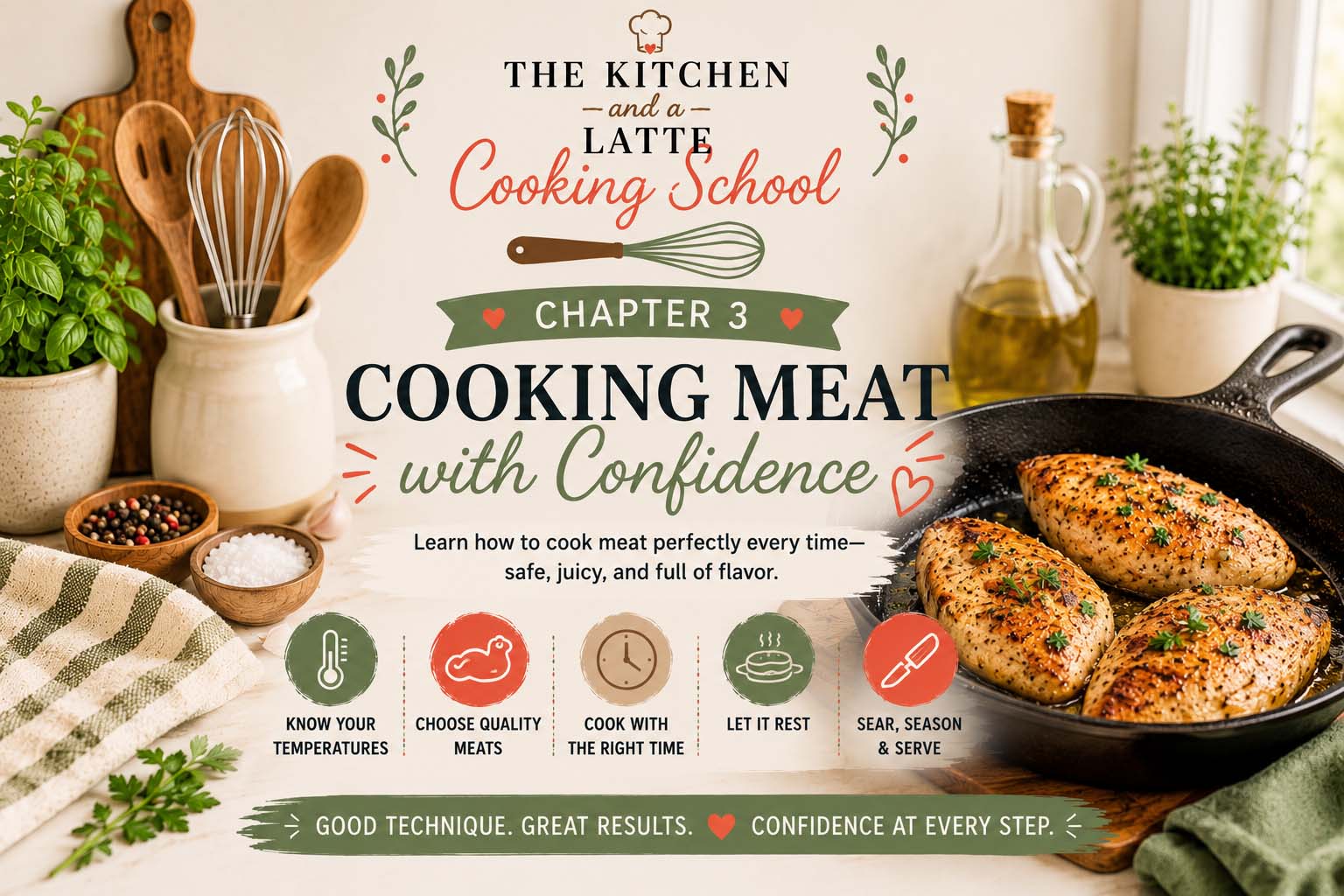
If there’s one thing that makes new cooks nervous, it’s cooking meat.
Unlike vegetables or pasta, meat has to be cooked to the proper temperature to be both safe and delicious.
Many beginners worry about undercooking chicken, overcooking steak, or ending up with dry pork chops.
The good news?
Cooking meat doesn’t have to feel like guessing.
Once you understand a few simple techniques, you’ll be able to cook juicy, flavorful meat with confidence.
You will be cooking T-Bone steak on the grill in no time!
Let’s start with one of the biggest myths in home cooking.
Color Doesn’t Always Tell You If Meat Is Done
One of the most common mistakes beginner cooks make is judging doneness by color alone.
While color can provide clues, it isn’t always accurate.
For example, chicken can still look slightly pink near the bone even after reaching a safe temperature.
Ground beef can lose its pink color before it’s fully cooked.
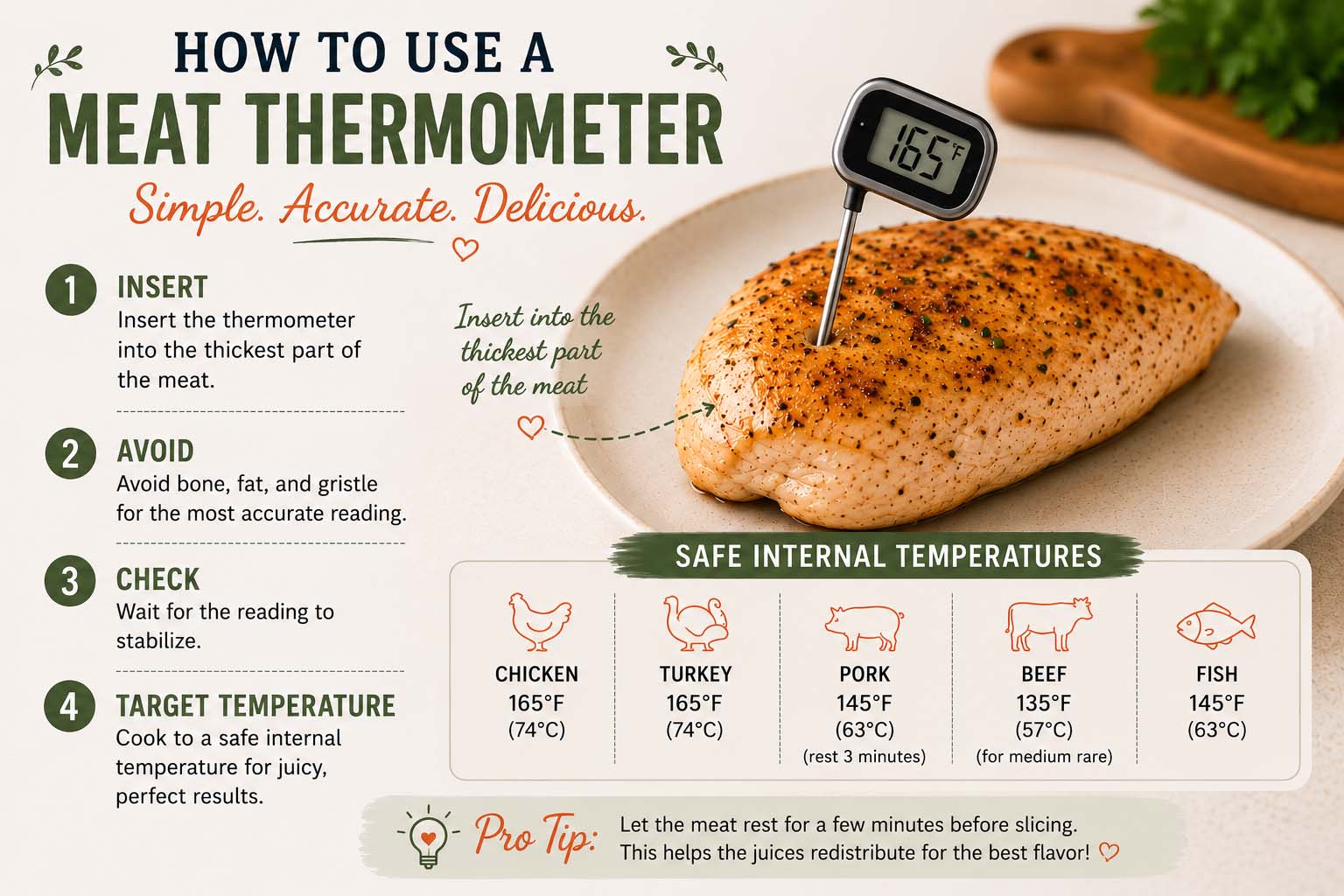
The safest and most reliable way to know when meat is done is by checking the internal temperature with a digital meat thermometer.
Instead of guessing, you’ll know for sure.
This one simple habit can completely change the way you cook.
👩🍳 Chef’s Tip – Checking Temperature
Insert the thermometer into the thickest part of the meat without touching bone.
Bone heats differently than meat and can give an inaccurate reading.
Using a Thermometer
⭐ Kitchen Confidence – Timing
The first time you cook chicken using a thermometer instead of cutting into it every few minutes, you’ve officially graduated from guessing to cooking with confidence.
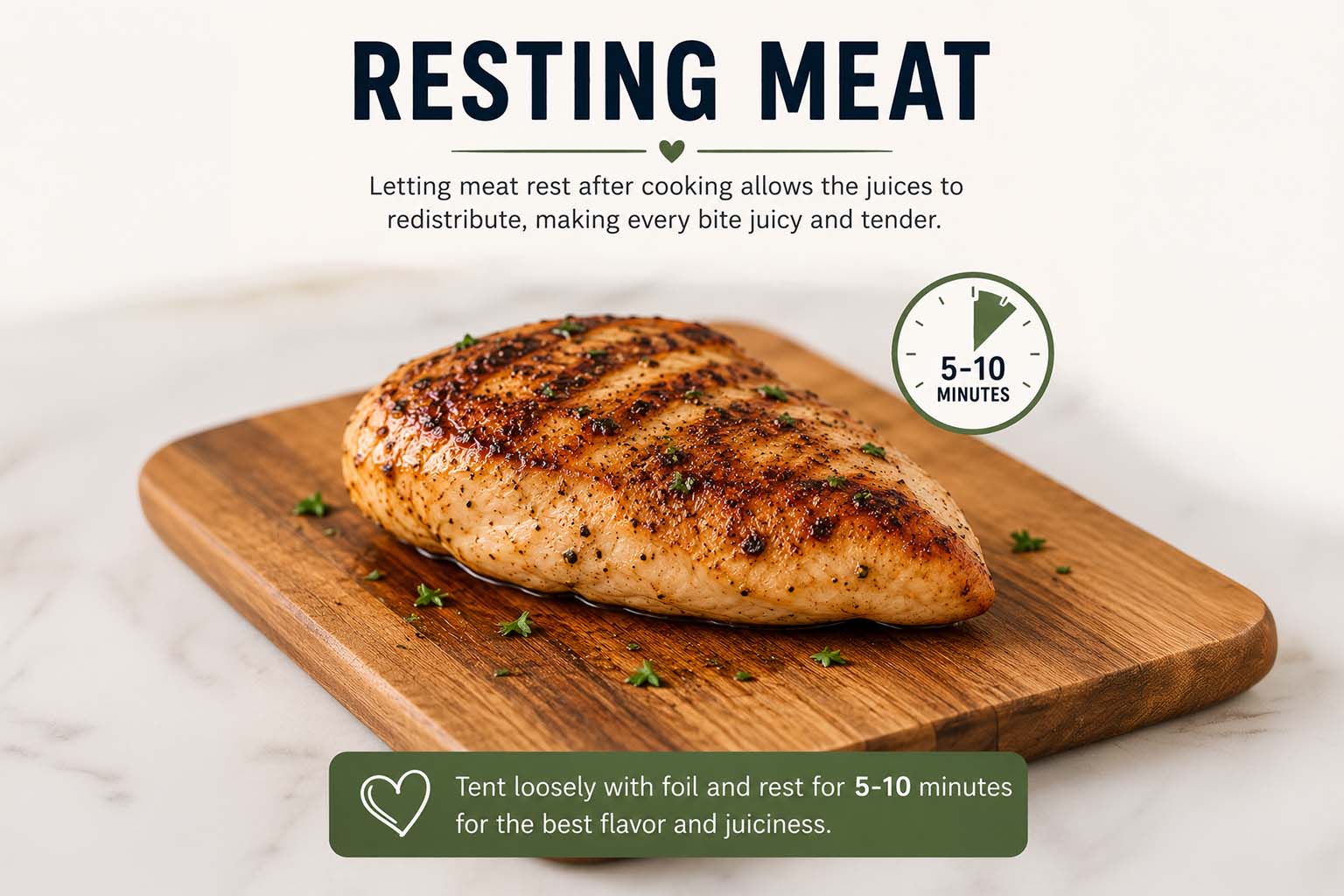
Don’t Skip the Resting Time
It can be tempting to slice into a steak or chicken breast the second it comes off the grill.
Try to resist.
While meat cooks, the juices move toward the center.
Resting allows those juices to spread back throughout the meat.
If you cut too soon, much of that moisture ends up on your cutting board instead of inside your dinner.
As a general rule:
- Chicken: Rest about 5 minutes.
- Pork: Rest 5 to 10 minutes.
- Steak: Rest 5 to 10 minutes.
- Large roasts: Rest 15 to 20 minutes. I let prime rib rest for 20-30 minutes before cutting.
Waiting a few extra minutes can make a surprisingly big difference in tenderness.
⚠️ Common Beginner Mistake – Don’t Cut The Meat
Cutting into meat immediately “to see if it’s done.”
Not only does this let the juices escape, but it also makes it harder to judge doneness accurately.
Pat Meat Dry Before Cooking
If you’ve ever wondered why restaurant steaks develop such a beautiful brown crust, here’s one reason.
They’re dry.
Moisture is the enemy of browning.
Before seasoning meat, gently pat it dry with paper towels.
Removing excess moisture helps create better caramelization and richer flavor.
This works especially well for:
- Chicken breasts
- Chicken thighs
- Steaks
- Pork chops
- Fish
Let Your Pan Do the Work
Many beginners constantly move meat around the pan.
Try not to.
Once meat touches a hot pan, leave it alone for a few minutes.
This allows it to develop a flavorful crust.
If the meat sticks slightly, don’t panic.
Most proteins naturally release from the pan once they’re properly browned.
Trying to force them loose too early often tears the surface and leaves flavor behind.
🍴 Practice Tonight – Learning to Flip
Cook two chicken breasts.
Flip one every minute.
Leave the other alone until it’s ready to release naturally.
Compare the color and flavor.
You’ll immediately understand why patience matters.
Learn Safe Internal Temperatures
Safe cooking temperatures aren’t something to memorize overnight.
They’re simply a tool that helps you cook confidently.
The more often you check temperatures, the more familiar they become.
Eventually, using a thermometer becomes second nature.
🔗 Continue Learning
Our complete Safe Internal Meat Temperatures Guide includes printable charts for chicken, beef, pork, seafood, and more.
Temperature
⭐ Kitchen Confidence – Meat Temperature
You do not have to memorize every temperature today.
That’s exactly why meat thermometers exist.
Even experienced cooks use them.
They’re a sign of confidence, not inexperience.
Dark Meat and White Meat Cook Differently
Chicken breasts and chicken thighs are both delicious, but they don’t behave the same way.
Chicken breasts are very lean, which means they can dry out if cooked too long.
Chicken thighs contain more fat and connective tissue, making them naturally more forgiving.
In fact, many cooks actually prefer thighs cooked a little longer because they become even more tender and flavorful.
Understanding these differences helps you choose the right cooking method for each cut.
👩🍳 Grilling Tip – Chicken
Chicken thighs are one of the easiest cuts of meat for beginner grillers because they stay juicy and are more forgiving than chicken breasts.
Season Meat Before It Hits the Heat
One of the easiest ways to build flavor is to season meat before cooking.
Even a simple combination of salt, pepper, garlic powder, and paprika can completely transform a piece of chicken or pork.
Seasoning before cooking gives the spices time to adhere to the surface and develop better flavor as the meat cooks.
Don’t be afraid to keep it simple.
Sometimes simple seasonings create the best meals.
Let Grilled Meat Finish Before Adding BBQ Sauce
Barbecue sauce contains sugar.
Sugar burns quickly over high heat.
Instead of brushing sauce on at the beginning, wait until the last few minutes of cooking.
This allows the sauce to caramelize beautifully without burning.
It’s a small detail that makes a big difference.
Slice Meat Against the Grain
Even perfectly cooked meat can seem tough if it’s sliced incorrectly.
Look closely at cooked meat and you’ll notice tiny muscle fibers running in one direction.
These are called the grain.
Cutting across those fibers instead of with them shortens the muscle strands and makes every bite easier to chew.
This is especially important for:
- Flank steak
- Skirt steak
- Brisket
- London broil
Confidence Comes from Repetition
No one cooks the perfect steak the first time.
Or the second.
Or sometimes even the fifth.
Confidence comes from repetition.
Every time you grill chicken…
Every pork chop you cook…
Every burger you flip…
You’re building experience.
Don’t measure success by making a perfect meal.
Measure success by learning something every time you cook.
That’s how great home cooks are made.
Meats
🏆 Kitchen Win – Cooking Meats
Congratulations!
You’ve finished one of the most intimidating parts of learning to cook.
You now understand the basics of cooking meat safely and confidently.
That’s a huge accomplishment.
Give yourself credit for how far you’ve come.
🎯 Homework
Before moving to Chapter 4, try one of these simple challenges:
✅ Cook chicken using a meat thermometer.
✅ Let steak rest before slicing.
✅ Practice patting meat dry before seasoning.
✅ Brush barbecue sauce on during the last few minutes of grilling.
2 recipes that are great for this assignment are – grilled leg quarters (you are using the pat dry method and the thermometer) and BBQ chicken legs (BBQ sauce at the end of cook time.)
Every meal is another opportunity to build confidence.
And remember…
You don’t have to become a great cook today.
You just have to cook one meal better than yesterday.
Confidence Level: ⭐⭐⭐☆☆
You’re becoming comfortable cooking meat! Keep practicing these skills before moving to the next lesson.
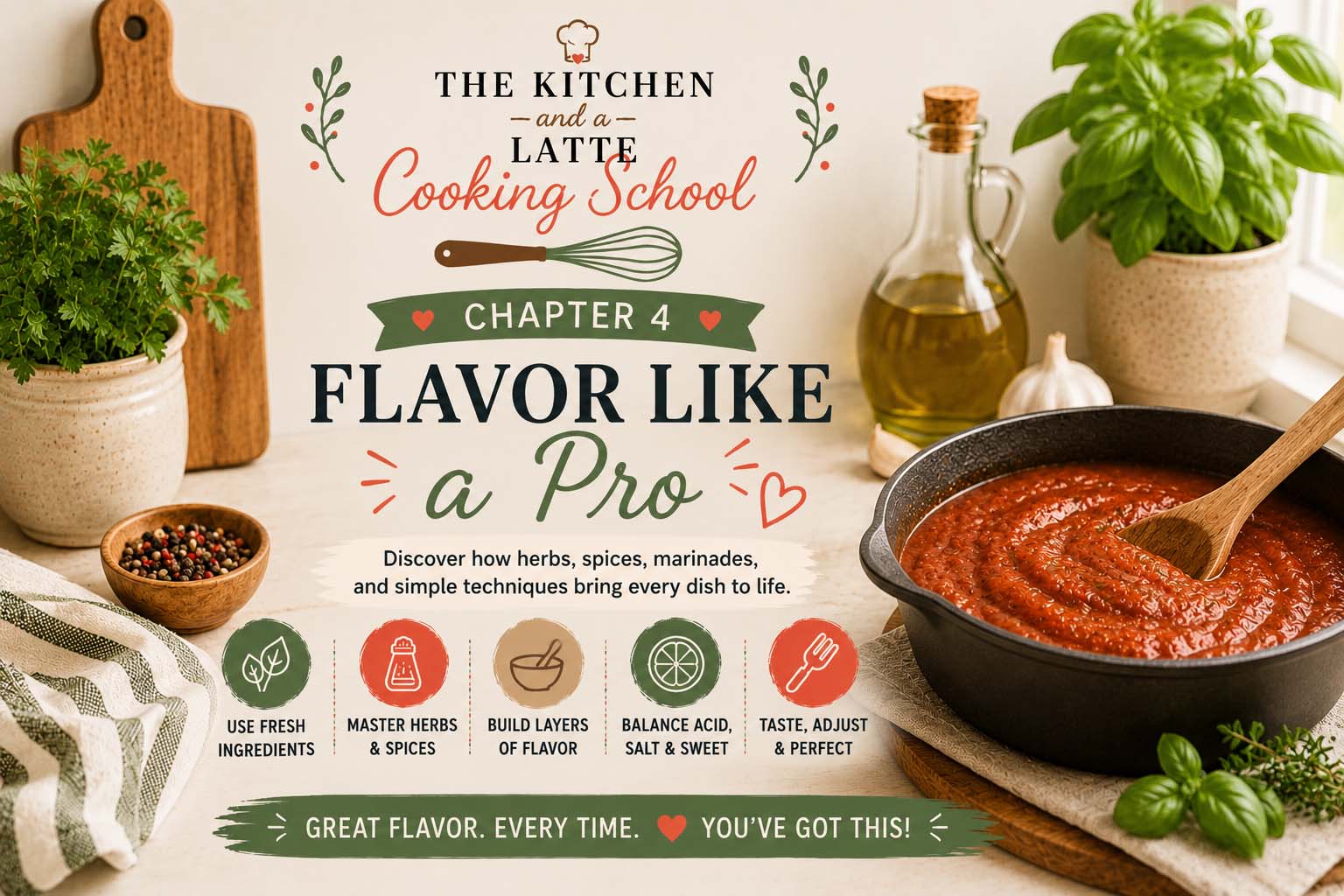
Chapter 4: Building Flavor and Cooking with Confidence
You’ve learned how to organize your kitchen.
You’ve learned how heat works.
You’ve learned how to cook meat safely.
Now it’s time for something even more exciting.
Making food that people actually ask you to make again.
Great cooks don’t rely on luck.
They build flavor one step at a time.
The good news?
None of these techniques are difficult.
They’re simply small habits that make a huge difference.
Let’s keep building your confidence.
Let Fresh Herbs Shine
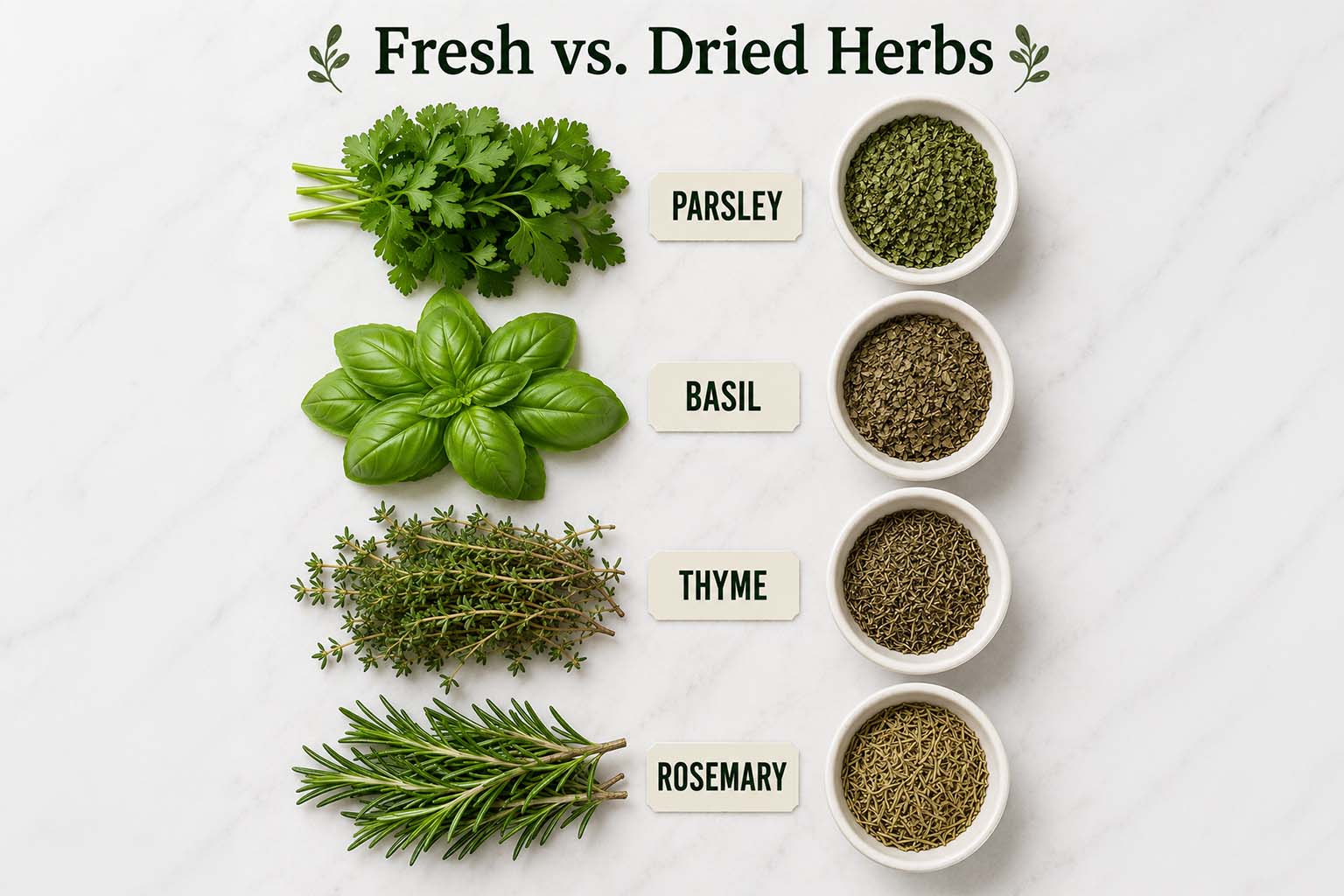
If you’ve only cooked with dried herbs, you’re in for a treat.
Fresh herbs add brightness, freshness, and color that dried herbs simply can’t match.
Parsley…
Basil…
Cilantro…
Rosemary…
Thyme…
Each one brings its own personality to a meal.
A sprinkle of fresh parsley over pasta or soup can completely change the look and flavor of a dish.
Fresh basil can transform a simple tomato sauce.
Fresh rosemary pairs beautifully with chicken, potatoes, pork, and steak.
You don’t need a lot.
Sometimes just a tablespoon of chopped fresh herbs is enough to make a meal taste restaurant-quality.
👩🍳 Chef’s Tip – Herbs
Delicate herbs like parsley and basil are usually added near the end of cooking.
Hardier herbs like rosemary and thyme can cook longer because they’re more durable.
Learn How to Cook Pasta Properly
Believe it or not, pasta is one of the most commonly overcooked foods.
The secret?
Cook it until it’s al dente.
That simply means the pasta is tender but still has a slight bite.
Always taste a piece during the last couple minutes of cooking instead of relying only on the timer.
Another important tip?
Salt your pasta water generously.
Pasta absorbs water while it cooks.
If the water isn’t seasoned, the pasta won’t be either.
Salt also helps prevent your pasta water from boiling over in the pot.
⚠️ Common Beginner Mistake – Pasta
Adding oil to pasta water.
Contrary to popular belief, oil doesn’t prevent sticking.
Instead, it coats the pasta and makes it harder for sauce to stick later.
Skip the oil.
Simply stir the pasta during the first minute or two of cooking.
Save a Little Pasta Water
This is one of those restaurant tricks that surprises people.
Before draining pasta, scoop out about a cup of the cooking water.
Why?
Because that starchy water helps sauces cling to pasta.
Adding a splash can make homemade Alfredo, marinara, or garlic butter sauce silky and smooth.
It’s a tiny step with a big payoff.
The pasta secret
🏆 Kitchen Win – Pasta
Congratulations!
You just learned one of the tricks professional chefs use every day.
Roast Vegetables Instead of Boiling Them
Roasting brings out natural sweetness and creates delicious caramelization.
Instead of plain vegetables…
You’ll get crispy edges and incredible flavor.
Great vegetables for roasting include:
- Broccoli
- Brussels sprouts
- Carrots
- Cauliflower
- Potatoes
- Asparagus
Simply toss them with olive oil, salt, pepper, and your favorite seasonings before roasting.
The oven does the rest.
🍴 Practice Tonight – Roasting Veggies
Roast broccoli instead of steaming it.
Notice how much more flavorful it becomes.
Learn to Deglaze a Pan
After cooking meat, you’ll often notice browned bits stuck to the bottom of the pan.
Don’t wash them away.
That’s flavor.
Add a splash of:
- Chicken broth
- Beef broth
- White wine
- Lemon juice
Then scrape those browned bits into your sauce.
This simple technique creates incredible flavor with almost no extra effort. We use those delicious bits in the pan fried chicken thighs. This is an intermediate recipe, but check it out. I bet you can make them!
💡 Did You Know?
Those browned bits are called fond.
Professional chefs consider them one of the most flavorful parts of cooking.
Butter Isn’t the Enemy
Butter has gotten a bad reputation over the years.
Used in moderation, it can make sauces richer, vegetables more flavorful, and baked goods more tender.
A small pat of butter stirred into mashed potatoes, steamed vegetables, or pasta right before serving can completely change the texture.
Remember…
You don’t always need more butter.
You just need to use it at the right time.
Learn the Difference Between Baking and Roasting
These two words are often used interchangeably.
Technically, they’re a little different.
Baking
Usually refers to foods like:
- Cakes
- Cookies
- Bread
- Casseroles
Roasting
Usually refers to:
- Vegetables
- Chicken
- Beef
- Pork
- Potatoes
Both use dry oven heat.
The names simply describe the type of food being cooked.
Don’t Open the Oven Every Five Minutes
We all do it.
We want to see how dinner is coming along.
Every time you open the oven door, heat escapes.
That means longer cooking times and uneven baking.
Instead, trust your timer.
Use the oven light whenever possible.
Save opening the door for when it’s actually time to check your food.
⚠️ Common Beginner Mistake – The Oven
Opening the oven repeatedly while baking cookies or cakes.
The temperature drop can affect how evenly baked goods rise.
Learn One New Recipe Every Week
You don’t have to master dozens of recipes at once.
Instead…
Choose one.
Practice it until you’re comfortable.
Then move on to another.
Over time, your collection of “go-to” recipes will grow naturally.
Before long, you’ll have meals you can cook without even looking at the recipe.
⭐ Kitchen Confidence
Great cooks don’t know every recipe.
They simply know a handful really well.
That’s all you need to get started.
Enjoy the Process
Some nights dinner will be amazing.
Other nights…
Not so much.
Both are completely normal.
Cooking isn’t just about feeding yourself.
It’s about learning a skill that you’ll use for the rest of your life.
Slow down.
Taste your food.
Laugh when something doesn’t go perfectly.
Celebrate the little victories.
Those moments are what make cooking enjoyable.
You learned a lot so far
🏆 Kitchen Win – Learning
Think back to your very first meal.
Now think about everything you’ve learned so far.
You understand heat.
You know how to season.
You know why resting meat matters.
You know how to roast vegetables.
You know how to build flavor.
You’re becoming a home cook.
That’s something to be proud of.
📖 Lesson Recap
Today you learned:
✔ Why fresh herbs make such a difference.
✔ How to cook pasta like a pro.
✔ Why pasta water is liquid gold.
✔ How roasting transforms vegetables.
✔ What deglazing is.
✔ When to use butter.
✔ Baking vs. roasting.
✔ Why opening the oven matters.
✔ How to build your recipe collection.
✔ Why enjoying the journey is just as important as the meal.
🎯 Homework
This week, try completing these three challenges:
✅ Roast one vegetable you’ve never roasted before.
✅ Save pasta water the next time you make pasta.
✅ Learn one brand-new recipe from start to finish.
Each meal you cook builds confidence for the next one.
Keep going.
You’re doing great.
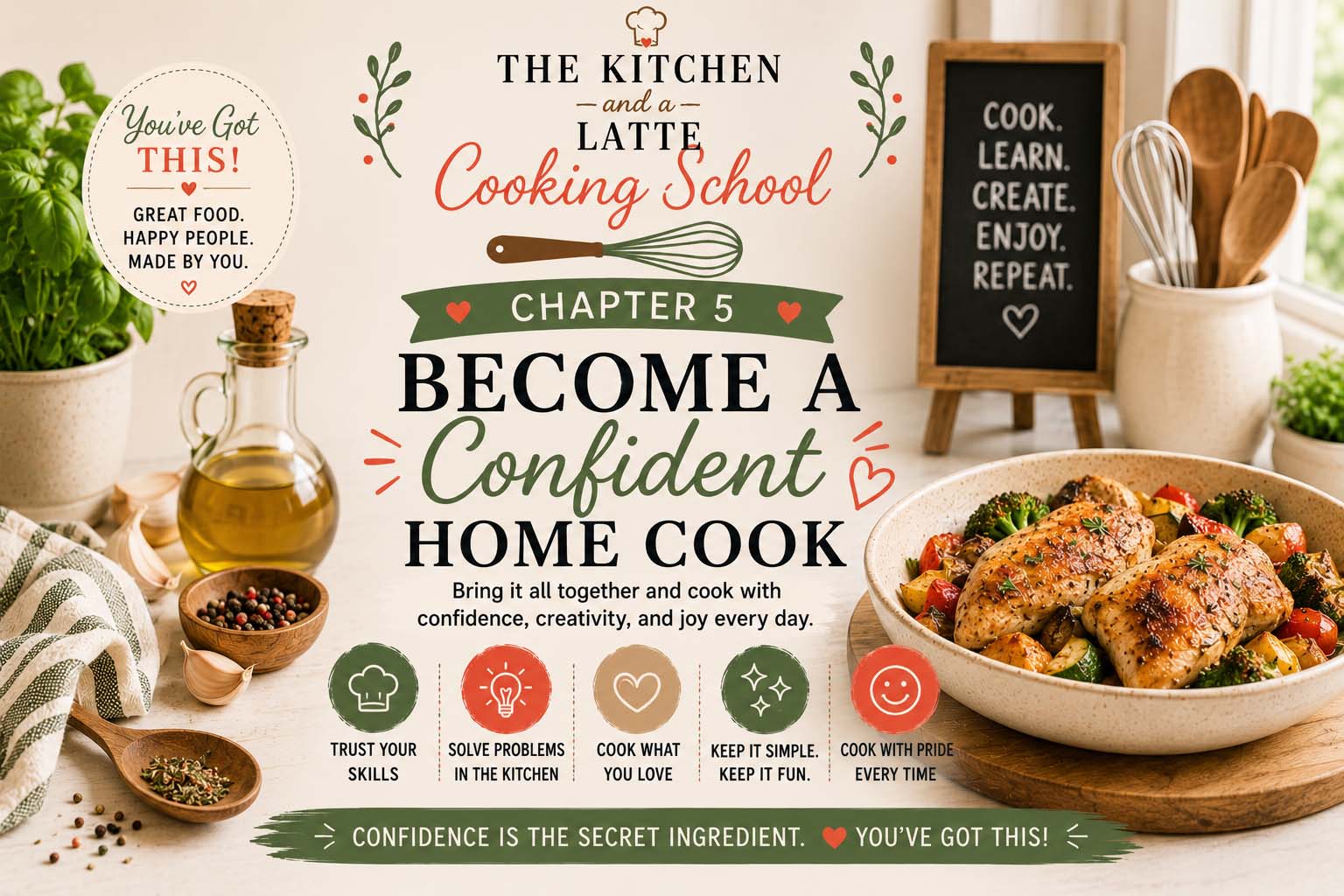
Chapter 5: Becoming a Confident Home Cook
Take a moment to think about everything you’ve learned so far.
When you first started this guide, you may have been nervous about cooking. Maybe you weren’t sure how to season food, cook chicken safely, or know when something was done.
Now you’ve learned the habits that experienced home cooks use every day.
You’ve built a strong foundation.
And that’s exactly what becoming a confident cook is all about.
Confidence doesn’t come from making one perfect meal.
It comes from cooking again tomorrow.
And the next day.
And the day after that.
Let’s finish this lesson with ten habits that will help you enjoy cooking for years to come.
Keep Your Kitchen Organized
A clean, organized kitchen makes cooking much less stressful.
Before you begin a recipe, make sure your counters are clear and your tools are easy to reach.
As you cook, wash measuring cups, bowls, and utensils whenever you have a few free minutes.
Not only will cleanup be easier, but you’ll also have more room to work.
An organized kitchen helps you stay focused on the fun part…cooking.
👩🍳 Chef’s Tip – The Trash
Keep a small bowl on the counter for vegetable peels, wrappers, and scraps while you cook.
It saves countless trips to the trash can.
Don’t Compare Yourself to Professional Chefs
Cooking shows are entertaining, but remember…
Professional chefs have years of experience.
They’ve practiced knife skills thousands of times.
They’ve made the same recipes over and over.
You don’t have to cook like a television chef to make an amazing meal.
Your goal isn’t perfection.
Your goal is making dinner for yourself and the people you love.
Celebrate your own progress instead of comparing yourself to someone else’s experience.
⭐ Kitchen Confidence
Every meal you cook is another lesson.
Even if dinner doesn’t turn out exactly as planned, you’re becoming a better cook.
That progress matters.
Learn One New Recipe at a Time
It can be tempting to save dozens of recipes on Pinterest and want to make all of them this week.
Instead, slow down.
Choose one recipe.
Make it.
Learn from it.
Once you feel comfortable, try another.
Before long, you’ll have a collection of favorite meals that you can cook almost without thinking.
Those recipes become the foundation of your confidence.
Making your own collection
🏆 Kitchen Win – Building a Collection
The first time you make one of your favorite recipes without looking at the instructions…
Congratulations.
You’re officially building your own collection of family favorites.
Ask “Why?” Instead of Just Following Recipes
Recipes tell you what to do.
Great cooks learn why.
For example:
Why do we let meat rest?
Why do we preheat a pan?
Why do we simmer instead of boil?
When you understand the reason behind each step, cooking becomes much easier.
You’ll be able to solve problems, make substitutions, and create your own meals with confidence.
Curiosity is one of the best ingredients you can bring into the kitchen.
Don’t Be Afraid to Experiment
Once you’ve made a recipe successfully, have a little fun.
Try a different herb.
Add your favorite cheese.
Swap one vegetable for another.
Use a different seasoning blend.
Small changes help you discover what you and your family enjoy most.
Some of the best recipes begin with a simple experiment.
⚠️ Common Beginner Mistake – Too Many Changes
Changing five ingredients in a recipe the very first time you make it.
If it doesn’t turn out, it’s hard to know what caused the problem.
Try the original recipe first.
Then make one or two changes the next time.
Build a Collection of Go-To Meals
You don’t need to know hundreds of recipes.
Most home cooks rely on about 15 to 20 meals they make regularly.
Think about creating your own collection.
Include recipes like:
- A favorite chicken dinner
- A quick pasta recipe
- Homemade soup
- Taco night
- A grilled meal
- A slow cooker favorite
- A simple dessert
These become the meals you can make confidently, even on busy weeknights.
🔗 Continue Learning
Keep an eye out for our upcoming Easy Recipes for Beginners collection, where we’ll share simple, dependable meals that are perfect for building confidence in the kitchen.
Celebrate Progress, Not Perfection
One of the biggest lessons in cooking has nothing to do with food.
It’s learning to celebrate progress.
Maybe your vegetables browned perfectly for the first time.
Maybe your grilled chicken stayed juicy.
Maybe your cookies actually looked like the picture.
Those little victories matter.
Every success builds confidence for the next meal.
Instead of focusing on what didn’t go perfectly, focus on what you learned.
🍴 Practice Tonight – Reflect on Your Cooking
After dinner, ask yourself these three questions:
What went well?
What would I do differently next time?
What new skill did I practice today?
Those answers will help you improve much faster than chasing perfection.
Enjoy Sharing Your Food
One of the greatest joys of cooking is sharing it with others.
Invite family to help prepare dinner.
Teach your kids how to measure ingredients.
Ask a friend to taste a new recipe.
Food has a wonderful way of bringing people together.
Some of the best memories are made around the dinner table.
Keep Cooking
This might sound simple, but it’s the most important advice in this guide.
Keep cooking.
Don’t wait until you feel like an expert.
Don’t worry if every meal isn’t perfect.
Every recipe teaches you something.
Every dinner builds confidence.
Every success reminds you why cooking is such a rewarding skill.
The only way to become a great home cook is to keep showing up in your kitchen.
And I know you can do that.
📖 Lesson Recap
Today you learned:
✔ How to stay organized in the kitchen.
✔ Why comparison steals confidence.
✔ How to build a collection of favorite recipes.
✔ Why understanding “why” makes you a better cook.
✔ How experimenting helps you grow.
✔ Why progress matters more than perfection.
✔ How sharing food creates lasting memories.
✔ The importance of simply keeping cooking.
🎓 Congratulations!
You did it!
You’ve completed Lesson 1 of The Kitchen and a Latte Cooking School.
Along the way, you’ve learned:
✅ How to build great kitchen habits.
✅ How to control heat with confidence.
✅ How to cook meat safely.
✅ How to build flavor in everyday meals.
✅ How to become a more confident home cook.
That’s an incredible accomplishment.
Remember, becoming a great cook doesn’t happen overnight.
It happens one recipe…
One meal…
And one lesson at a time.
The fact that you’re here means you’ve already taken the most important step.
You started.
🎯 Beginner Cook Graduation Checklist
Before moving on to Lesson 2, see how many of these skills you can check off.
☐ I read recipes all the way through before I start.
☐ I prepare my ingredients before cooking.
☐ I understand the difference between boiling and simmering.
☐ I know how to season food throughout the cooking process.
☐ I can brown food without overcrowding the pan.
☐ I know how to use a digital meat thermometer.
☐ I understand why resting meat matters.
☐ I know how to roast vegetables.
☐ I can cook pasta properly.
☐ I know why saving pasta water is helpful.
☐ I understand how to adjust heat while cooking.
☐ I feel more confident trying new recipes.
☐ I know that mistakes are part of learning.
☐ I have at least one recipe I can make with confidence.
☐ I’m excited to keep learning!
Even if you couldn’t check every box today, don’t worry.
Every time you step into the kitchen, you’ll gain more experience and confidence.
Keep this guide bookmarked and come back whenever you need a refresher.
I’ll be right here, cheering you on.
Ready for Lesson 2?
Now that you’ve learned the basics of cooking, it’s time to build the perfect beginner kitchen.
In the next lesson of The Kitchen and a Latte Cooking School, we’ll cover Kitchen Essentials for Beginners, including the tools that are truly worth buying, which gadgets you can skip, and how to stock your kitchen without spending a fortune.
I can’t wait to see you there!