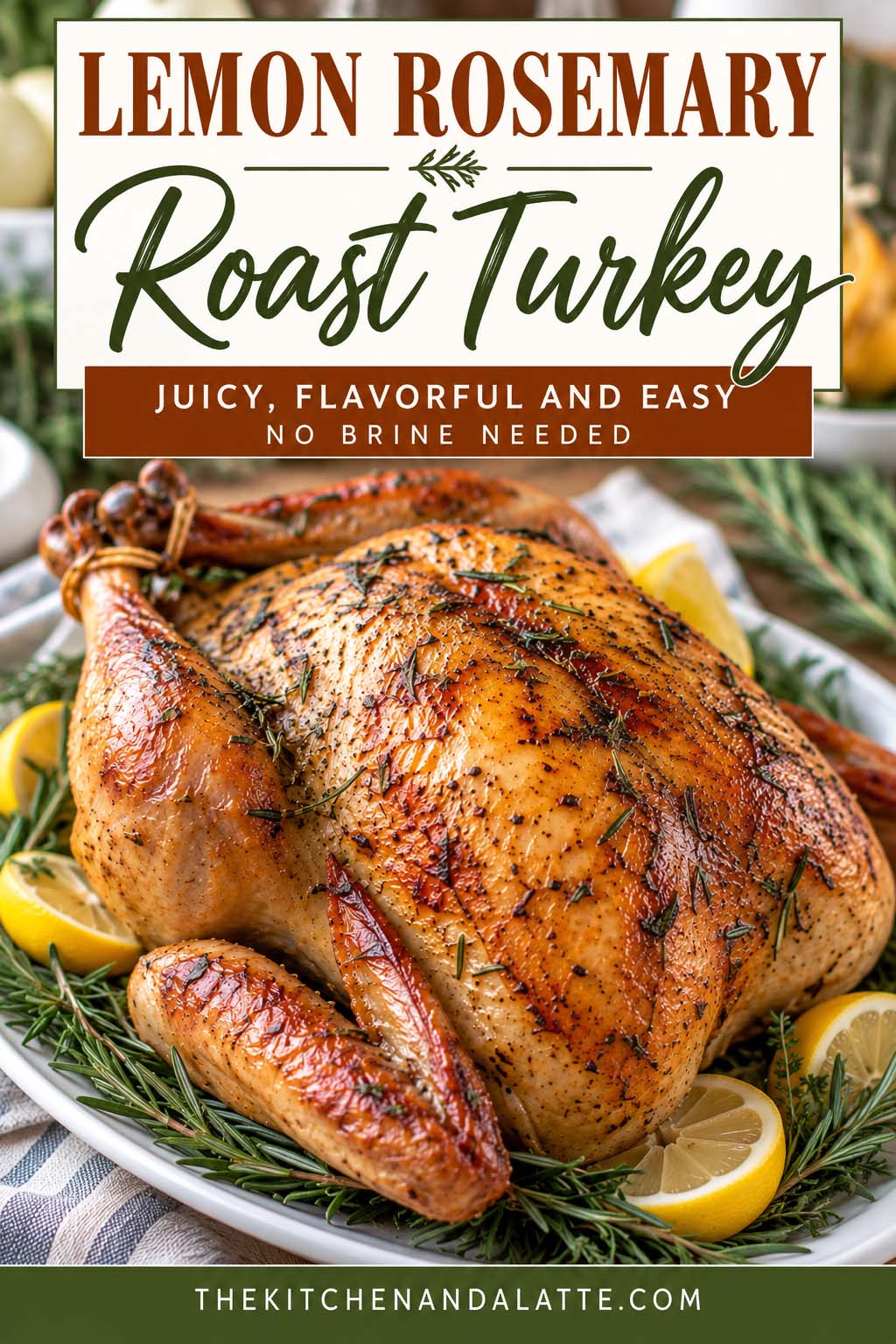
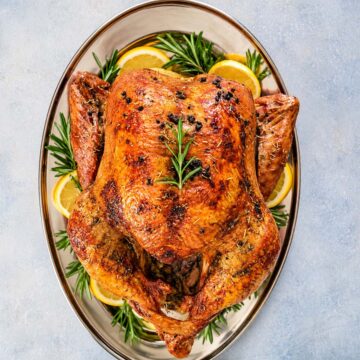
Lemon Rosemary Roast Turkey (Juicy and Easy, No Brine Needed)
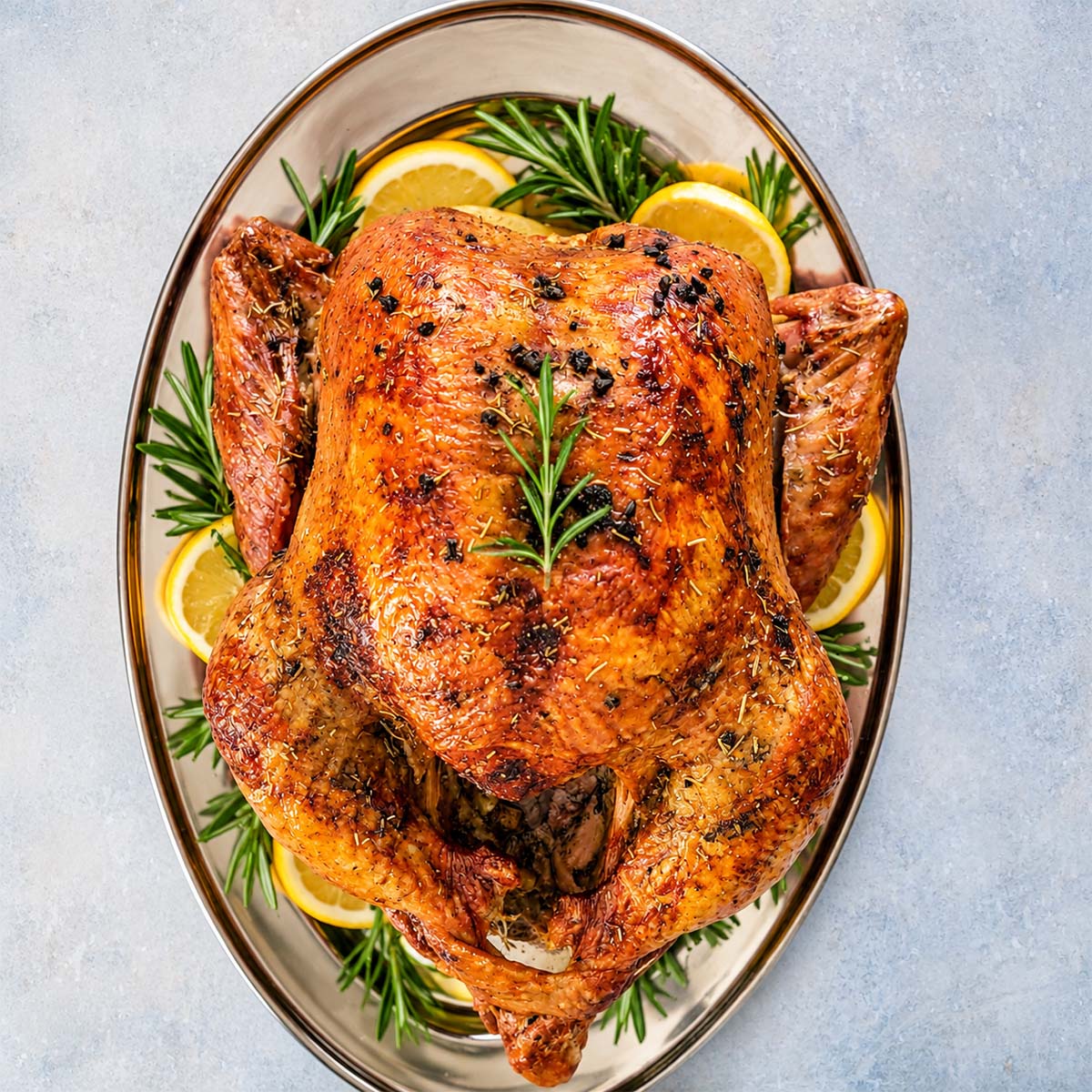
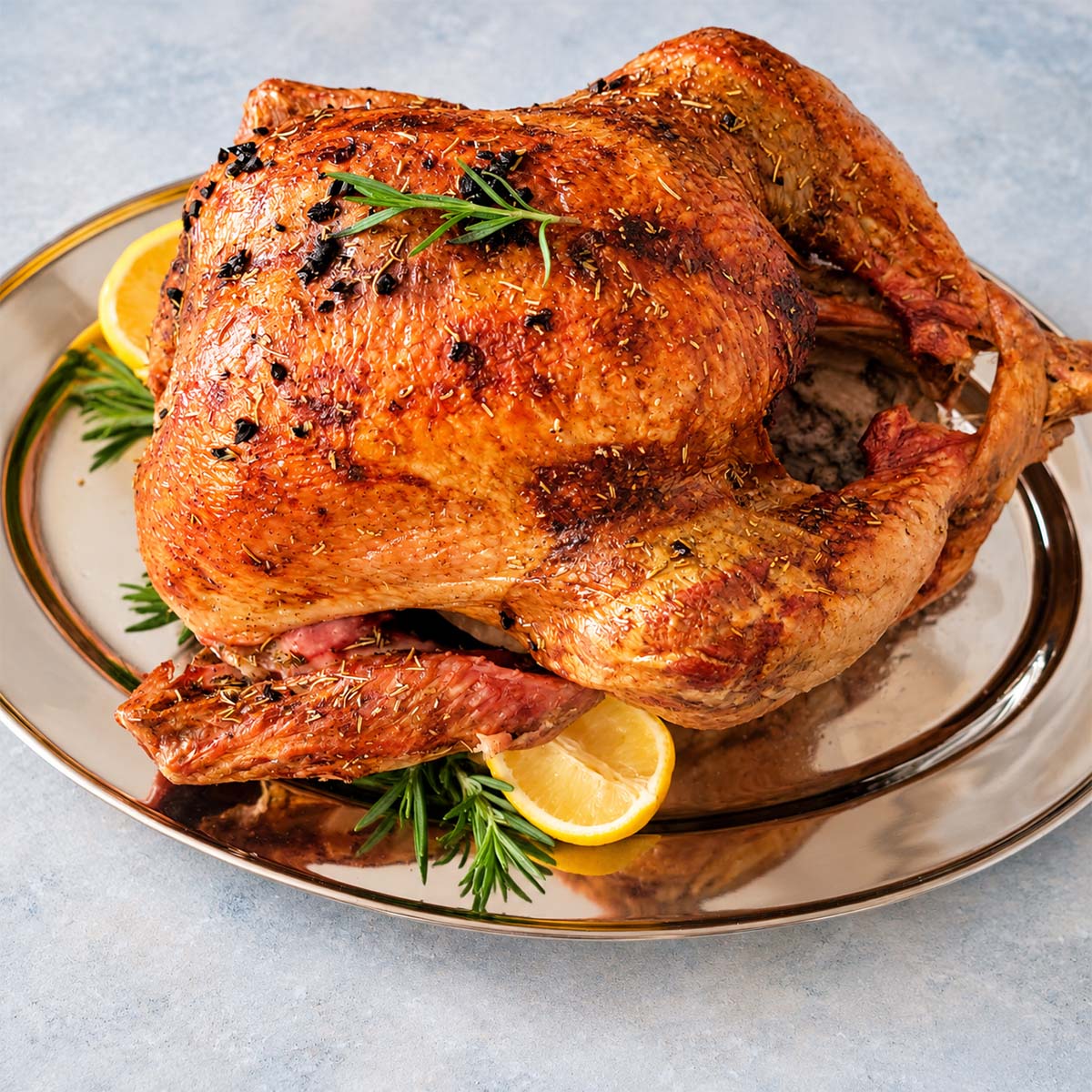
This lemon rosemary roast turkey is juicy, tender, and full of flavor from fresh garlic, rosemary, lemon, and butter. With simple ingredients and no brining required, it’s an easy way to make a delicious holiday turkey without a lot of extra preparation.
Whether you’re making Thanksgiving dinner, Christmas dinner, or a special family meal, this roasted turkey makes a beautiful centerpiece for your table.
The lemon adds a subtle citrus flavor without making the turkey taste sour, while the garlic and rosemary give it a delicious savory flavor. Butter placed underneath the skin adds richness to the breast meat, and roasting the turkey uncovered helps create beautifully golden skin.
We love roast turkey in our house and make it more than just for Thanksgiving. Over the years, we’ve experimented with different seasonings and cooking methods, and this lemon rosemary version has become one of our favorites.
I also prefer to keep holiday cooking simple. There are enough things to worry about when preparing a big dinner, and your turkey shouldn’t be one of them!
If you prefer a more traditional turkey without lemon, try my classic roast turkey recipe instead.
We use affiliate links on our site. This post may contain affiliate links and we may earn a commission on qualifying purchases. Please see our affiliate disclosure for more details.
Why You’ll Love This Lemon Rosemary Turkey
Easy preparation: Most of the cooking time is hands-off, giving you time to prepare the rest of your holiday dinner.
No brining required: You don’t need to soak the turkey overnight in a saltwater solution.
Simple ingredients: Butter, fresh lemon, rosemary, garlic, salt, and pepper create plenty of flavor.
Juicy and tender: Butter underneath the breast skin adds richness while careful temperature monitoring helps prevent overcooking.
Golden, flavorful skin: Roasting uncovered helps the turkey develop a beautiful golden-brown exterior.
Perfect for holiday gatherings: This recipe uses a 16–22 pound turkey, making it a great choice when feeding a crowd.
Ingredients for Lemon Rosemary Roast Turkey

You only need a handful of simple ingredients to make this flavorful roasted turkey.
Whole Turkey: This recipe is designed for a 16–22 pound turkey. Plan on approximately 1–1½ pounds of whole turkey per person, depending on how many leftovers you’d like. Remember that some of the weight comes from the bones.
Butter: I prefer salted butter, especially for placing underneath the breast skin. You can use unsalted butter if you prefer, but you may need to adjust the added salt.
Lemon: Use a fresh lemon because you’ll need both the juice and the squeezed lemon halves. The lemon adds a subtle citrus flavor without overpowering the turkey. Fresh lime can also be substituted.
Rosemary: I use dried rosemary for this recipe. It adds delicious flavor and is easy to keep on hand. Fresh rosemary can also be used.
Garlic: Fresh garlic works best. Some of the garlic is chopped and added to the butter mixture, while the remaining cloves are placed inside the turkey cavity.
Salt: I prefer fine sea salt, but regular table salt works too. Check whether your turkey has already been salted or enhanced before adding the full amount.
Black Pepper: Freshly ground black pepper adds great flavor, but regular ground pepper works just fine.
See the recipe card below for the complete ingredient list and exact measurements.
How to Make Lemon Rosemary Roast Turkey
Making this lemon rosemary turkey is easier than you might think! The key is preparing the turkey properly, seasoning it well, and using a meat thermometer to know exactly when it’s done.
Step 1: Prepare the Turkey
Start with a completely thawed turkey.
If your turkey is frozen, allow enough time to thaw it safely in the refrigerator. Plan on approximately 24 hours for every 4–5 pounds of turkey.
For a large 16–22 pound turkey, this can take approximately 4–6 days, so plan ahead!
You can also thaw a turkey in cold water, allowing about 30 minutes per pound. Keep it in leakproof packaging, change the water every 30 minutes, and cook it immediately after thawing.
Remove the turkey from its packaging and check both the main cavity and the neck cavity for the giblets and neck. Remove any packets before cooking.
There’s no need to rinse the turkey. Instead, pat the skin dry with paper towels. Removing excess moisture also helps the skin brown during roasting.
Place the turkey breast-side up on the rack inside your roasting pan.
You can tuck the wing tips underneath the turkey to prevent them from browning too much, although this is optional.
I also prefer to keep the legs secured together using kitchen twine or an oven-safe leg holder. Some turkeys even have a small opening in the skin that can hold the legs together.
Step 2: Make the Lemon Rosemary Butter
For this recipe, we’re using butter in two different ways.
Half of the butter is melted with the seasonings, while the remaining butter is cut into thin slices and placed underneath the breast skin.
Chop two cloves of garlic and cut the remaining three cloves into quarters.
Melt 3 tablespoons of butter in a small saucepan over low to medium-low heat.
Add the chopped garlic, dried rosemary, salt, and black pepper.
Heat gently for approximately one minute, stirring occasionally. You want the garlic to release its flavor into the butter without browning or burning.
Remove the saucepan from the heat.
Squeeze the fresh lemon into a small bowl, then stir the juice into the melted butter mixture.
Save the squeezed lemon halves because we’ll use those inside the turkey.
Step 3: Place Butter Under the Turkey Skin

This is one of my favorite tricks for making a delicious roast turkey!
Carefully loosen the skin covering the turkey breasts without removing it.
Starting near the end of the breast closest to the legs, gently slide your fingers between the skin and the meat.
Work slowly so you don’t tear the skin.
Place the thin slices of butter underneath the loosened skin, spreading them across both breasts as evenly as possible.
As the turkey roasts, the butter melts and adds richness and flavor directly to the breast meat.
You don’t need to completely separate the skin from the turkey. Just create enough space to slide the butter underneath.
Step 4: Season the Turkey
Place the squeezed lemon halves and quartered garlic cloves loosely inside the turkey cavity.
These are simply aromatics to add flavor, not a traditional bread stuffing. Avoid packing the cavity tightly.
Using a basting brush, generously brush the lemon rosemary butter mixture over the exposed skin.
Make sure to coat the breast, thighs, legs, and wings.
There’s no need to lift the turkey out of the roasting pan to season the underside.
Use all of the seasoning mixture, even if it seems like a lot.
The combination of butter, garlic, lemon, and rosemary gives the turkey plenty of delicious flavor while it roasts.
Tip: If the butter mixture starts to solidify before you finish brushing the turkey, gently warm it until it’s easy to spread again.
Step 5: Roast the Lemon Rosemary Turkey
Preheat your oven to:
- 350°F for a conventional oven
- 325°F for a convection oven
Position your oven rack so the turkey sits near the center of the oven. For a large turkey, this usually means placing the rack in one of the lower positions.
Place the roasting pan in the oven and roast the turkey uncovered.
I prefer roasting the turkey uncovered because it allows the skin to become beautifully golden brown.
If the skin starts getting too dark before the turkey is fully cooked, loosely tent the top with aluminum foil.
There’s no need to repeatedly open the oven to baste the turkey. The butter and seasonings are already doing their job!
Step 6: Check the Internal Temperature

A reliable meat thermometer is one of the most important tools for roasting a turkey.
The turkey must reach a minimum internal temperature of 165°F in the thickest part of the breast, innermost thigh, and innermost wing. Avoid touching the bone when checking the temperature.
I prefer dark meat, including the thighs and legs, cooked to around at least 175°F because I find the texture more tender at that temperature.
However, you don’t want to overcook the breast while waiting for the thighs to reach your preferred temperature.
I recommend using an oven-safe probe thermometer so you can monitor the turkey without repeatedly opening the oven door. Before removing the turkey, verify the temperature in all three locations with an instant-read thermometer.
Step 7: Rest Before Carving
Once your turkey has reached a safe internal temperature, carefully remove it from the oven.
Allow it to rest for at least 20–30 minutes before carving.
Resting helps the juices redistribute throughout the meat and makes the turkey easier to carve.
Don’t skip this step, even if everyone is ready to eat!
How Long Does It Take to Roast a Lemon Rosemary Turkey?
Cooking time depends on the size of your turkey and whether you’re using a conventional or convection oven.
For this recipe, I recommend roasting at 350°F in a conventional oven or 325°F in a convection oven.
For planning purposes, here are approximate roasting times for an unstuffed turkey at 350°F in a conventional oven.
| Turkey Weight | Approximate Cooking Time |
|---|---|
| 16–18 pounds | 3¾–4¼ hours |
| 18–20 pounds | 4¼–4½ hours |
| 20–22 pounds | 4½–4¾ hours |
These are general planning estimates. The lemon and garlic in the cavity, the size of the bird, and your oven can all affect the cooking time.
Convection ovens may cook faster, so begin checking the internal temperature earlier.
Always use a meat thermometer rather than relying on cooking time alone. The breast, innermost thigh, and innermost wing must all reach at least 165°F.
Allow an additional 20–30 minutes for resting before carving.
Tips for the Best Lemon Rosemary Roast Turkey
Start with a completely thawed turkey. A partially frozen turkey can cook unevenly, leaving some areas undercooked while others become dry.
Pat the skin dry. Removing excess moisture helps the turkey develop golden-brown skin during roasting.
Don’t skip the butter under the skin. It adds richness and flavor directly to the breast meat.
Use fresh lemon. The juice adds a subtle citrus flavor, while the squeezed halves add aroma inside the cavity.
Avoid opening the oven repeatedly. Every time you open the oven door, heat escapes and can affect the cooking time.
Use a meat thermometer. Turkey size and oven temperatures vary, so checking the internal temperature is much more reliable than cooking by time alone.
Let the turkey rest. Give it at least 20–30 minutes before carving to help keep the meat juicy.
Common Mistakes to Avoid
1. Not Thawing the Turkey Completely
A partially frozen turkey can cook unevenly, making it difficult to get the breast and thighs cooked properly.
How to avoid it: Allow enough time to thaw your turkey safely before cooking. Large turkeys can take several days to thaw in the refrigerator.
2. Relying Only on Cooking Time
Every turkey and oven is a little different. Even two turkeys of the same weight may not finish cooking at exactly the same time.
How to avoid it: Use the roasting times as a guide and check the internal temperature with a reliable meat thermometer.
3. Overcooking the Breast Meat
Turkey breast is leaner than dark meat and can become dry when cooked too long.
How to avoid it: Monitor the breast temperature along with the thighs. While I prefer dark meat around 175°F, the breast only needs to reach 165°F for safe cooking.
Frequently asked questions
No! The lemon adds a subtle citrus flavor that complements the garlic, rosemary, and butter.
The turkey won’t have an overpowering lemon flavor, and it definitely won’t taste sour.
No. This recipe is designed to be made without brining.
The butter underneath the skin adds richness and flavor, while careful temperature monitoring helps prevent the turkey from drying out.
If you’re using a self-basting or pre-brined turkey, check the packaging before adding salt because it may already contain added seasonings.
Absolutely! Fresh rosemary works well in this recipe.
As a general rule, use approximately three times as much fresh rosemary as dried rosemary.
I prefer roasting this turkey uncovered so the skin becomes beautifully golden brown.
If the turkey starts browning too quickly before it’s fully cooked, loosely cover the top with aluminum foil.
No. The lemon rosemary butter mixture adds plenty of flavor to the outside, and the butter underneath the breast skin adds richness.
You can baste if you prefer, but it’s not necessary for this recipe.
Refrigerate leftover turkey within two hours of cooking.
Remove the meat from the bones if desired and store it in shallow, airtight containers so it cools quickly.
Cooked turkey can be stored in the refrigerator for 3–4 days or frozen for longer storage.
To reheat, place sliced turkey in an oven-safe dish with a little broth or leftover pan juices. Cover with foil and warm until the turkey reaches an internal temperature of 165°F.
What to Serve With Lemon Rosemary Roast Turkey
One of my favorite things about a holiday turkey dinner is all the delicious side dishes!
This lemon rosemary turkey pairs beautifully with traditional Thanksgiving and Christmas favorites.
Some of our favorites include:
- Creamy mashed potatoes
- Homemade stuffing
- Sweet potato casserole
- Homemade cranberry sauce
- Garlic butter green beans
- Instant Pot sweet potatoes and butternut squash
If you’re preparing a large holiday meal, Instant Pot side dishes are especially helpful because they leave the oven and stovetop available for everything else.
And don’t forget the gravy!
Helpful Equipment for Roasting Turkey
You don’t need a lot of special equipment to make a delicious roast turkey, but a few tools make the process easier.
As an Amazon Associate, I earn from qualifying purchases at no additional cost to you.
- Roasting pan with rack -A sturdy roasting pan allows heat to circulate around the turkey while catching the drippings underneath. I prefer stainless steel roasting pans.
- Turkey tongs – These make it easier to safely transfer a large turkey from the roasting pan to a carving board.
- Basting brush – Perfect for spreading the lemon rosemary butter mixture evenly over the turkey. I prefer silicone because there are no loose bristles to worry about.
- Meat thermometer – I highly recommend a thermometer with an oven-safe probe. It allows you to monitor the temperature without repeatedly opening the oven door. An instant-read thermometer is also useful for checking multiple areas of the turkey.
More Holiday Recipes You’ll Love
If you’re planning Thanksgiving, Christmas, or another holiday dinner, be sure to check out my other holiday recipes.
For a traditional turkey without lemon, try my classic roast turkey recipe.
You can also browse my Holiday Recipes collection for delicious roasts, side dishes, and homemade desserts to complete your holiday menu.
Have you ever roasted a turkey with lemon and rosemary? I’d love to hear how you prepare your holiday turkey!
Pin it for later!
Lemon Rosemary Roast Turkey
Equipment
- Meat thermometer
Ingredients
- 16-22 pounds turkey see notes
- 6 Tablespoons butter divided
- 5 cloves garlic
- 1 lemon
- 1½ teaspoons rosemary dried
- 1 teaspoon salt
- ¼ teaspoon pepper

Instructions
- Preheat oven to 350° Fahrenheit for conventional (no fan) or 325° Fahrenheit for convection. If you have an oven that has a convection roast feature, use that set to 325°.
- Remove turkey from the fridge and take it out of the packaging. Remove any giblets from the neck and cavity.Pat the skin dry and the inside of the cavity dry with paper towels.16-22 pounds turkey
- Place turkey on the rack of the roasting pan, tuck the wings (optional) and tie the legs. Set aside. It will sit out about 30 minutes before going in the oven.
- Chop 2 garlic cloves and cut the other 3 cloves into quarters.Toss the quarters into the cavity of the turkey.5 cloves garlic
- Hand squeeze the lemon into a small bowl – be sure to hand squeeze, you only need a little juice but want some to remain in the peels.After squeezing the juice, toss both halves into the cavity of the turkey.1 lemon
- Thinly slice 3 tablespoons of butter and carefully push the slices under the skin over the breast meat. Do not remove skin and you should be able to gently lift it just enough to squeeze butter slices in.
- In small pan melt the remaining 3 tablespoons of butter.Add in the chopped garlic, rosemary, pepper and salt. Cook for about 1 minute. You don't want anything to brown, just letting the flavors combine into the butter.Remove from heat and pour in the lemon juice. Stir to mix well.1½ teaspoons rosemary, 1 teaspoon salt, ¼ teaspoon pepper
- With a basting brush, evenly spread the butter mixture over the top and sides of the turkey. Do not lift the turkey out of the pan to season, the bottom doesn't need to be seasoned. Be sure to use all of the seasoning mixture.Insert a thermometer probe into the thickest part of the thigh now if using one.
- Put the oven rack in one of the lower positions so your turkey will sit evenly in the center of the oven. Bake at 350° (conventional) or 325° (convection/convection roast) for 10-15 minutes per pound.
- If it is starting to brown too quickly, loosely cover with foil and continue to cook.Cook until the thickest part of the thigh is at least 165° and the thickest part of the breast meat is 165°. Legs and thighs have the best taste and texture if cooked to at least 175℉, but they need to be at least 165° to be safe to eat.
- Once the turkey is up to temperature, remove from oven and allow to rest for at least 20 minutes before carving, but no longer then an hour.
Notes
- Nutrition and cooking time: Nutritional values and estimated cooking time are based on an 18-pound turkey divided into 12 servings. Actual values and cooking times will vary.
- Turkey size: Plan on approximately 1–1½ pounds of whole turkey per person, depending on how many leftovers you’d like.
- Thawing: Make sure your turkey is completely thawed before roasting. If using the cold-water method, keep the turkey in leakproof packaging, fully submerged in cold water, and change the water every 30 minutes. Cook immediately after thawing.
- Butter: Salted or unsalted butter works well. Adjust the added salt as needed, especially if your turkey is pre-brined or enhanced.
- Check the temperature: Always use a meat thermometer instead of relying on the pop-up timer. The thickest part of the breast, innermost thigh, and innermost wing must reach at least 165°F. I prefer thigh meat around 175°F for tenderness.
- Rest before carving: Allow the turkey to rest for 20–30 minutes before carving to help keep the meat juicy.
Nutrition
Rosemary, Lemon and Garlic roast turkey has step by step slide.